

Handmade Soaps: Why They Matter for Sustainable Living
Choosing truly handmade soap can feel confusing when every label claims to be natural and sustainable. For environmentally conscious individuals in the United Kingdom, understanding what sets authentic artisanal creations apart matters not only for the planet but for your own wellbeing. This guide reveals the genuine features and benefits of handmade soap, helping you navigate ingredient lists and production methods so you can support ethical brands and nurture your skin with confidence.
Table of Contents
- What Makes Soap Truly Handmade?
- Distinct Benefits of Handmade Soaps
- Key Ingredients and Their Advantages
- Eco Impact: Packaging and Waste Reduction
- Supporting Ethical Brands and Local Makers
- Handmade Soaps Versus Mass-Produced Options
Key Takeaways
| Point | Details |
|---|---|
| Authenticity of Handmade Soap | Handmade soaps are crafted using traditional methods, prioritising natural ingredients and small-batch production without industrial shortcuts. |
| Benefits of Handmade over Mass-Produced | Handmade soaps provide superior skin nourishment and are free from synthetic chemicals, making them suitable for sensitive skin. |
| Environmental Considerations | Handmade soap producers focus on sustainable packaging and local ingredient sourcing, reducing their ecological footprint. |
| Support for Local Economies | Purchasing handmade soaps supports local artisans and ethical brands that reinvest in their communities and uphold fair production practices. |
What Makes Soap Truly Handmade?
Handmade soap represents a meticulous craft that goes far beyond commercial mass production. Unlike factory-manufactured products, truly handmade soaps are carefully crafted using traditional techniques that prioritise natural ingredients and artisanal processes. Researchers developing natural soap formulations demonstrate how these products combine scientific precision with traditional botanical knowledge.
The fundamental characteristics of authentic handmade soap include:
- Small-batch production with individual attention to each creation
- Manual mixing and pouring techniques
- Selection of natural, organic ingredients
- Cold process or hot process soap making without industrial shortcuts
- No synthetic preservatives or mass-market additives
Authentic handmade soap makers meticulously select each ingredient, understanding how specific botanical extracts and natural oils interact to create a unique product. They often use traditional saponification methods, where natural fats or oils are combined with an alkali like sodium hydroxide to create soap through a careful chemical transformation.
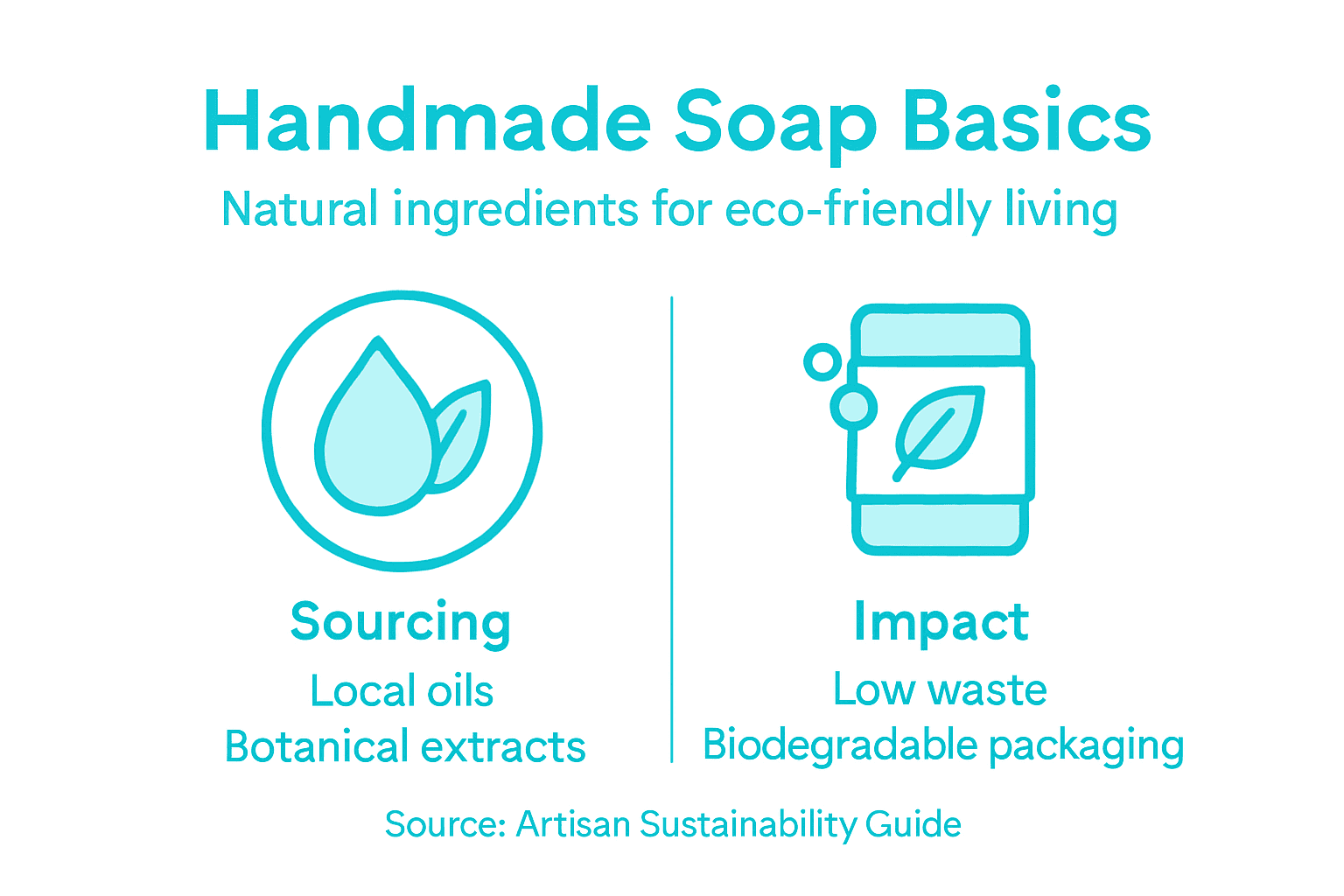
Ingredient sourcing plays a crucial role in defining truly handmade soap. Artisan soap makers typically work directly with local suppliers, ensuring transparency in their supply chain and supporting small-scale agriculture. They prioritise organic, sustainably harvested ingredients that maintain ecological balance and support small community producers.
Pro tip: When purchasing handmade soap, ask the maker about their specific production process and ingredient origins to verify its authentic craftsmanship.
Distinct Benefits of Handmade Soaps
Handmade soaps offer far more than just basic cleansing - they represent a holistic approach to personal care that prioritises health, sustainability, and individual wellness. Herbal soap formulations provide multiple skin benefits that commercial products simply cannot match, delivering powerful natural therapeutic properties.
The key advantages of handmade soaps include:
- Exceptional skin nourishment through natural ingredients
- Minimal environmental impact
- Chemical-free formulations
- Support for small-scale producers
- Customisable skincare solutions
Unlike mass-produced alternatives, handmade soaps retain natural glycerin, a crucial moisturising component typically removed in commercial manufacturing processes. This means each bar provides deeper hydration and genuine skincare benefits. The absence of synthetic preservatives and harsh chemicals makes these soaps particularly beneficial for individuals with sensitive skin or those prone to dermatological reactions.
Environmental sustainability represents another critical advantage of handmade soaps. Small-batch producers typically source ingredients locally, minimise packaging waste, and utilise biodegradable components. By choosing handmade soaps, consumers directly support ecological practices and reduce their carbon footprint while enjoying superior personal care products.
Pro tip: When selecting handmade soaps, examine the ingredient list carefully and prioritise products with transparent, minimal, and natural ingredient compositions.
Key Ingredients and Their Advantages
Handmade soaps represent a beautiful alchemy of natural ingredients, each carefully selected to provide unique skin-nourishing properties. Herbal ingredients offer remarkable bioactive benefits that transform an ordinary cleansing product into a holistic skincare experience.
The fundamental ingredients in high-quality handmade soaps typically include:
- Vegetable oils such as olive, coconut, and castor
- Natural butter like shea and cocoa
- Essential botanical extracts
- Plant-based glycerin
- Organic herbal additives
Each oil and butter plays a crucial role in soap composition. Olive oil provides gentle moisturisation, coconut oil creates luxurious lather, and castor oil contributes to soap’s conditioning properties. These natural fats undergo a precise saponification process, where they chemically interact with sodium hydroxide to create a gentle, skin-nurturing product that retains its inherent moisturising qualities.

Natural additives elevate handmade soaps from mere cleansing products to therapeutic skincare solutions. Botanical extracts like lavender, chamomile, and rosemary not only provide delightful aromatherapeutic experiences but also offer antiseptic, anti-inflammatory, and antioxidant properties. These carefully chosen ingredients make each soap a unique, personalised skincare experience that commercial products cannot replicate.
Here is a summary of common natural soap ingredients and their primary skincare benefits:
| Ingredient | Primary Benefit | Typical Function in Soap |
|---|---|---|
| Olive Oil | Gentle hydration | Softens and soothes skin |
| Coconut Oil | Rich lather, cleansing | Provides a creamy foam |
| Shea Butter | Deep moisturisation | Repairs and protects skin |
| Lavender Extract | Calming, soothing | Adds fragrance, reduces irritation |
| Rosemary Extract | Antioxidant, purifying | Supports scalp and skin care |
| Castor Oil | Conditioning, shine | Enhances bar hardness |
Pro tip: Learn to read ingredient labels carefully, prioritising soaps with recognisable, natural components and avoiding those with long lists of synthetic chemicals.
Eco Impact: Packaging and Waste Reduction
The environmental impact of soap production extends far beyond its ingredients, with packaging representing a critical consideration for conscious consumers. Life cycle assessments reveal significant packaging challenges in traditional soap manufacturing, highlighting the urgent need for sustainable alternatives.
Key strategies for reducing ecological footprint include:
- Minimalist packaging design
- Biodegradable wrapping materials
- Recyclable packaging solutions
- Plastic-free product presentations
- Refillable soap container systems
Handmade soap producers typically prioritise environmentally responsible packaging approaches that dramatically reduce waste compared to mass-market alternatives. This might involve using recycled paper, compostable materials, or even eliminating packaging entirely through innovative solid bar designs that require no additional wrapping.
Moreover, some innovative initiatives are transforming waste management in the soap industry. Programmes like the Soap for Hope project demonstrate how creative recycling can turn potential waste into valuable resources, supporting both environmental sustainability and community welfare by repurposing soap packaging and remnants.
Pro tip: When purchasing handmade soaps, prioritise brands that use minimal, biodegradable packaging and offer refill or return programmes for containers.
Supporting Ethical Brands and Local Makers
Consumer choices have profound ripple effects across global supply chains, and purchasing handmade soaps represents a powerful mechanism for driving positive change. Ethical handmade soap brands demonstrate remarkable sustainability commitments through transparent, responsible production practices that prioritise environmental and social consciousness.
Key characteristics of truly ethical soap brands include:
- Direct support for local artisan communities
- Transparent ingredient sourcing
- Fair compensation for craft producers
- Minimal environmental impact
- Commitment to organic production methods
Supporting local makers goes beyond simply purchasing a product - it represents an investment in sustainable economic ecosystems. Small-scale soap producers often work directly with local agricultural communities, ensuring fair trade practices and maintaining traditional crafting techniques that have been passed down through generations. These artisans typically reinvest their earnings back into their immediate communities, creating a virtuous cycle of economic empowerment.
Moreover, ethical soap brands frequently prioritise sustainable practices that extend far beyond their immediate product. This might involve using renewable energy in production, implementing water conservation techniques, supporting biodiversity through responsible ingredient sourcing, and maintaining stringent environmental standards that commercial manufacturers often overlook.
Pro tip: Before purchasing, research the soap maker’s supply chain and ask direct questions about their sourcing, production methods, and community impact.
Handmade Soaps Versus Mass-Produced Options
The fundamental differences between handmade and mass-produced soaps extend far beyond mere appearance, representing distinct philosophies of personal care and manufacturing. Handcrafted soaps offer nuanced production approaches that prioritise individual quality over industrial efficiency.
Key distinctions between handmade and commercial soaps include:
- Small-batch artisanal production
- Natural ingredient preservation
- Customised formulation potential
- Minimal synthetic chemical usage
- Variable aesthetic characteristics
Mass-produced soaps typically prioritise cost-effectiveness and standardisation, using synthetic detergents and chemical preservatives that can strip skin of its natural protective oils. In contrast, handmade soaps are crafted with meticulous attention to ingredient quality, often retaining glycerin and incorporating botanical extracts that provide genuine skincare benefits.
The production methodology reveals stark contrasts in approach. Commercial soap manufacturers focus on creating uniform products with extended shelf life, frequently sacrificing skin nutrition for economic efficiency. Handmade soap artisans, however, view each bar as a unique creation, carefully selecting natural oils, experimenting with botanical ingredients, and understanding the intricate chemical interactions that create a superior cleansing experience.
Below is a concise comparison of traditional handmade and mass-produced soaps across several important factors:
| Aspect | Handmade Soap Example | Mass-Produced Soap Example |
|---|---|---|
| Ingredient Origin | Local, sustainable farms | Global, industrial suppliers |
| Production Scale | Dozens to hundreds per batch | Thousands per hour |
| Glycerin Content | Retained naturally | Often removed |
| Packaging Materials | Paper or compostable wraps | Plastic wrappers |
| Skin Sensitivity Focus | Gentle and moisturising | Can contain irritants |
Pro tip: Always examine soap ingredients closely, prioritising products with recognisable, natural components over lengthy lists of unpronounceable chemical additives.
Embrace Sustainable Living with Handmade Soaps from The Soap Lab
Discover how choosing authentic handmade soaps can transform your daily routine and support a greener planet. If you are seeking to reduce your environmental impact while enjoying deeply nourishing skincare, our Organic Personal Care Products – The Soap Lab Scotland offer a curated selection of ethically crafted, eco-friendly soaps made with pure, natural ingredients. These small-batch creations deliver genuine hydration and gentle cleansing without synthetic additives.

Take the step today to enhance your wellbeing and the environment. Explore unique, plant-powered formulations and discover personalised skincare solutions that respect both your skin and the earth’s resources. Visit The Soap Lab to find your perfect handmade soap and join a community committed to conscious, sustainable living.
Frequently Asked Questions
What are the benefits of using handmade soaps?
Handmade soaps offer exceptional skin nourishment, minimal environmental impact, chemical-free formulations, support for small-scale producers, and customizable skincare solutions. They retain natural glycerin, which provides deeper hydration and genuine skincare benefits, especially for sensitive skin.
How do handmade soaps differ from mass-produced soaps?
Handmade soaps are produced in small batches with natural ingredients, retaining glycerin and avoiding synthetic additives, while mass-produced soaps often utilise chemicals and detergents for cost-effectiveness and shelf stability. This results in more nourishing and gentle products with a focus on quality.
What ingredients are typically found in handmade soaps?
Common ingredients in handmade soaps include vegetable oils like olive, coconut, and castor, natural butters such as shea and cocoa, essential botanical extracts, plant-based glycerin, and organic herbal additives. These ingredients provide various skin benefits and contribute to a unique skincare experience.
How can I support ethical brands when buying handmade soaps?
To support ethical brands, research the makers’ ingredient sourcing and production methods, look for transparency in their supply chains, ensure fair compensation for producers, and choose products that prioritise minimal environmental impacts, like biodegradable packaging and sustainable ingredient sourcing.



