

Organic Skincare Explained: Benefits for Sensitive Skin
Choosing the right skincare can feel daunting when your priority is both sensitive skin and a healthier planet. For many in the UK, embracing organic skincare is about far more than following a beauty trend. It reflects a commitment to sustainability, ingredient transparency, and ethical sourcing. By understanding the meaning of organic skincare and clearing up common misconceptions, you gain clarity on what truly matters for your well-being and the environment. Bold choices start with informed decisions about what you put on your skin.
Table of Contents
- Organic Skincare Meaning And Misconceptions
- Organic, Natural, And Clean Products Compared
- UK Standards And Global Organic Certifications
- Benefits For Sensitive And Eco-Conscious Skin
- Risks, Marketing Claims, And Common Pitfalls
Key Takeaways
| Point | Details |
|---|---|
| Understanding Organic Skincare | Organic skincare products use ingredients from farms that avoid synthetic chemicals, supporting sustainable agriculture. Consumers should be aware of the variance in pricing and efficacy among brands. |
| Differentiating Product Categories | Recognise the differences between organic, natural, and clean products to make informed choices for sensitive skin. These terms do not guarantee safety or suitability on their own. |
| Importance of Certifications | Look for reputable third-party organic certifications that verify ingredient sourcing and safety standards, such as COSMOS and ECOCERT. This ensures products meet required compliance for sensitive skin. |
| Caution Against Marketing Claims | Be sceptical of broad marketing claims on organic skincare, as they often lack scientific backing. Always research product effectiveness rather than relying solely on promotional statements. |
Organic skincare meaning and misconceptions
Organic skincare refers to products formulated with ingredients grown without synthetic pesticides, fertilizers, or genetically modified organisms. This means the plants used in your cleanser, moisturiser, or serum have been cultivated using natural farming methods that respect both soil health and biodiversity. For eco-conscious consumers in the UK, this alignment with sustainable agriculture often matters as much as the skincare benefits themselves.
However, the term “organic” carries significant weight in marketing, and misconceptions abound. Many assume organic skincare automatically costs more or lacks the innovation of conventional products. The reality is far more nuanced. Pricing depends largely on branding and marketing strategies rather than purely on organic certification status. A small artisanal producer might charge less than a major beauty conglomerate, even with identical organic credentials.
Another common assumption is that organic equals safe. This isn’t necessarily true. The FDA does not define “organic” or “natural” cosmetics, and whilst the USDA National Organic Program certifies organic agricultural ingredients, organic labelling does not ensure product safety. Even natural ingredients can trigger allergies or contain compounds that irritate sensitive skin. A plant extract certified organic might still cause inflammation for someone with reactive skin conditions.
Some people believe organic skincare offers fewer ingredient options, limiting innovation. In truth, the organic skincare industry continues to grow and evolve. Formulators are developing sophisticated products within organic constraints, creating effective solutions that compete with conventional alternatives. The difference lies in how ingredients are sourced and processed, not in efficacy.
The broader misconception frames organic skincare as purely about farming practices. Organic skincare embodies sustainability that extends beyond agriculture. It encompasses ethical sourcing, minimal packaging waste, and fair trade practices. For the eco-conscious UK consumer, this holistic approach to sustainability often represents the real appeal.
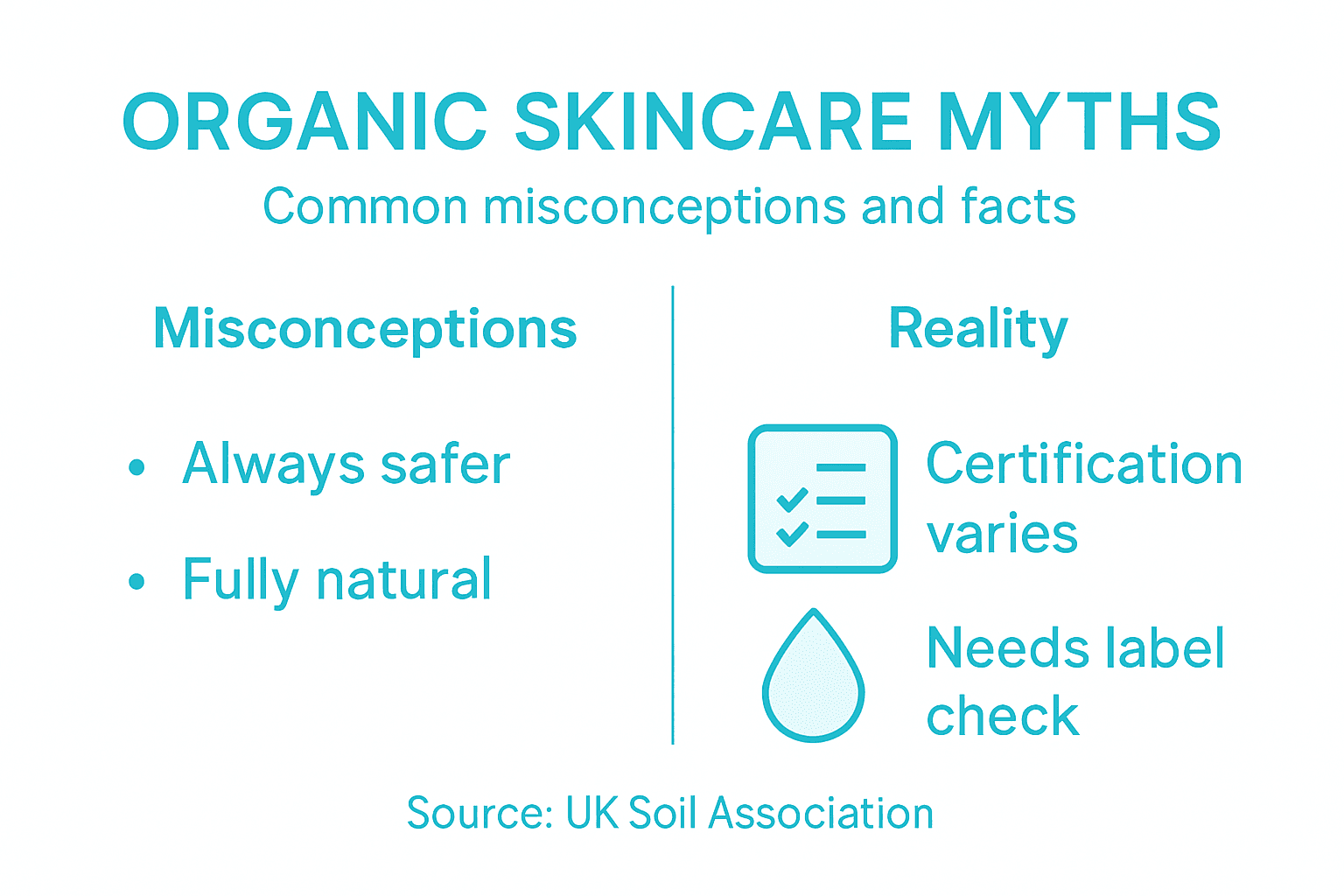
Pro tip: Read ingredient lists and certifications rather than relying solely on “organic” claims on packaging. Look for third-party certifications from organisations that verify both organic status and safety standards, ensuring what you’re applying actually suits your sensitive skin.
Organic, natural, and clean products compared
Three terms dominate skincare marketing today: organic, natural, and clean. Yet they mean very different things, and understanding the distinctions matters when you have sensitive skin. Many people assume these labels are interchangeable, but they represent different certifications, sourcing methods, and regulatory frameworks.
Natural ingredients are derived from plants, animals, or minerals using physical or natural solvent processes. A natural ingredient might come from a conventional farm using pesticides and synthetic fertilisers. It’s still natural because the extraction method uses no artificial chemicals. Natural doesn’t guarantee organic certification or sustainable farming practices. What matters to you is whether that natural ingredient suits your sensitive skin, not just its origin.
Organic ingredients come from certified organic farming or wild harvesting, meaning the plants grew without synthetic pesticides or fertilisers. This is where sustainability enters the picture. An organic ingredient has documented sourcing and certification standards behind it. However, organic certification focuses on farming practices, not necessarily on how that ingredient is processed or formulated into your skincare product.

Clean beauty is trickier. It’s primarily a marketing term implying the absence of questionable chemicals, but it lacks any standard definition or regulatory framework. One brand’s “clean” formula might look completely different from another’s. Interestingly, research shows that natural products can emit volatile organic compounds at levels comparable to or even higher than conventional products, challenging assumptions that natural automatically means safer.
The cosmetics industry faces real challenges replacing synthetic ingredients with sustainable natural alternatives without compromising safety or efficacy. Brands genuinely committed to organic formulations must innovate within stricter ingredient constraints. Natural ingredients sourced responsibly are increasingly available, but consumer preference for organic options is growing faster than supply chains can scale.
For sensitive skin, the most important factor isn’t which category a product falls into. What matters is whether specific ingredients work for your skin. An organic product might irritate you, whilst a conventional one soothes inflammation. Read ingredient lists carefully rather than relying on category labels alone.
The following table clarifies how organic, natural, and clean skincare differ in sourcing, certification, and suitability for sensitive skin:
| Product Type | Ingredient Sourcing Method | Certification Required | Suitability for Sensitive Skin |
|---|---|---|---|
| Organic | Certified organic farms only | Third-party mandatory | Often formulated for gentleness |
| Natural | Conventional or natural sources | No mandatory certification | May include allergenic extracts |
| Clean | Varies by brand, sometimes synthetic | No standardised certification | Depends on specific formula |
Pro tip: Look for products with third-party organic certifications alongside a transparent ingredient list. For sensitive skin, test one new product at a time over two weeks to identify what actually works for your skin, regardless of whether it’s organic, natural, or clean branded.
UK standards and global organic certifications
If you’re buying skincare in the UK, understanding which certifications actually matter is crucial. The landscape differs significantly from other countries, and knowing what to look for protects both your sensitive skin and your values as an eco-conscious consumer.
The UK operates under strict cosmetic regulations that all products must follow. Under Regulation 1223/2009 and the Cosmetic Products Enforcement Regulations 2013, every cosmetic sold in Great Britain must meet rigorous safety and labelling standards. Brands must appoint a Responsible Person based in the UK, maintain detailed Product Information Files in English, and notify products via the UK SCPN notification system. This means even if a product is organic certified globally, it still requires UK compliance to be legally sold here.
Globally, several certifications signal genuine organic credentials. The most recognised is COSMOS, which combines standards from multiple European organic certification bodies. ECOCERT provides stringent certification criteria covering ingredient transparency, sustainable sourcing, manufacturing practices, and social responsibility. When you see ECOCERT or COSMOS certification on a UK product, you know it’s been independently verified against these standards.
Other recognised certifications include the Soil Association standard used in the UK, Natrue in Europe, and BDIH in Germany. Each has slightly different requirements, but all demand transparency about ingredient sourcing and restrict synthetic additives. For sensitive skin, these certifications matter because they typically exclude known irritants and synthetic fragrances that trigger reactions.
Here is a quick reference to the main global and UK organic skincare certifications and what they verify:
| Certification Body | Regions Covered | Verifies Ingredient Origin | Assesses Manufacturing Standards |
|---|---|---|---|
| COSMOS | Europe/Global | Yes | Yes |
| ECOCERT | Global | Yes | Yes |
| Soil Association | UK | Yes | Yes |
| Natrue | Europe | Yes | Limited |
| BDIH | Germany/EU | Yes | Limited |
The key distinction: UK law ensures cosmetic safety regardless of organic status, but organic certifications guarantee sourcing standards and ingredient quality. A non-organic product meeting UK safety regulations is safe; an organic certified product offers additional assurances about farming practices and ingredient integrity.
When buying organic skincare in the UK, look for products meeting both UK cosmetic regulations and recognised global certifications. This dual compliance ensures your product is legally sold here and independently verified as genuinely organic.
Pro tip: Check product packaging for certification logos from ECOCERT, Soil Association, or COSMOS alongside UK regulatory compliance. If certifications aren’t visible, ask the retailer for their Product Information File or certification documentation before purchasing.
Benefits for sensitive and eco-conscious skin
Organic skincare addresses two concerns that matter deeply to you: caring for reactive skin and supporting sustainable practices. These benefits work together rather than separately, creating a genuine alignment between your skin health and your environmental values.
Sensitive skin reacts to harsh chemicals, synthetic fragrances, and preservatives found in conventional products. Organic skincare avoids these irritants entirely. By eliminating parabens, synthetic fragrances, and synthetic preservatives, organic formulations reduce the likelihood of inflammation, redness, and uncomfortable reactions. Your skin simply encounters fewer trigger substances.
Organic ingredients themselves offer active benefits beyond just being gentler. Plant-based antioxidants, vitamins, and minerals naturally support your skin’s barrier function and reduce inflammation. Chamomile calms irritation. Aloe vera soothes and hydrates. Calendula promotes healing. These aren’t trendy ingredients; they’ve been used for centuries because they genuinely work. Unlike synthetic alternatives created in laboratories, these plant compounds integrate with your skin’s natural processes.
Organic products are formulated to respect your skin’s natural pH balance rather than disrupting it. This matters tremendously for sensitive skin, which struggles when its protective acid mantle is compromised. Products designed around organic principles tend to be hypoallergenic and non-irritating by default, making them ideal for reactive skin types.
The eco-conscious benefit runs equally deep. Organic farming protects soil health, reduces chemical runoff into waterways, and supports biodiversity. When you choose organic skincare, you’re directly supporting farming practices that treat the planet as carefully as they treat your skin. There’s no contradiction between self-care and environmental care. Both happen simultaneously.
For someone with sensitive skin and environmental values, organic skincare represents integrity. You’re not compromising on either front. Your skin gets the gentleness it needs, and your purchasing power supports the sustainable practices you believe in.
Pro tip: Introduce organic skincare gradually, adding one product every two weeks rather than switching everything at once. Even gentle organic products can cause adjustment reactions in highly sensitive skin, so patience during the transition helps you identify what truly works for you.
Risks, marketing claims, and common pitfalls
Organic skincare isn’t immune to marketing exaggeration. In fact, the organic and natural skincare market is rife with unsubstantiated claims that undermine genuine products and mislead consumers. Understanding where pitfalls hide protects both your wallet and your skin.
Marketing claims about organic skincare often lack scientific backing. Brands make assertions about healing properties, miracle results, or universal suitability without conducting proper testing or providing evidence. Consumer scepticism towards organic cosmetics remains a significant barrier to market growth precisely because vague or exaggerated claims erode trust. A product claiming to “cure” eczema or “eliminate” sensitive skin entirely is making a claim that’s unrealistic and potentially illegal.
Packaging analysis reveals a troubling pattern. Many natural cosmetics display claims lacking proper substantiation. Terms like “hypoallergenic,” “clinically proven,” or “dermatologist tested” appear without the required evidence or testing behind them. Legal guidelines exist, but enforcement remains inconsistent, creating a landscape where misleading claims slip through.
Common pitfalls for sensitive skin buyers include several mistakes. First, assuming organic automatically means hypoallergenic. Organic plant extracts can still trigger allergies. Second, believing that “natural” equals safe for your specific skin condition. Many natural ingredients, whilst gentle on average skin, irritate sensitive skin severely. Third, switching entire routines at once based on marketing promises rather than gradual, careful testing.
Pricing exploits consumer trust too. Some brands charge premium prices purely on organic claims without delivering superior formulations. Meanwhile, genuinely committed artisanal producers charge less. Price alone doesn’t indicate quality or authenticity.
The most dangerous pitfall is treating organic skincare as a replacement for medical advice. If you have eczema, dermatitis, or severe sensitivity, organic products support skincare but don’t substitute professional diagnosis or treatment.
Pro tip: Seek products with third-party certifications and published test results rather than relying on packaging claims alone. Request evidence if a brand makes specific therapeutic claims, and remember that credible brands will provide Product Information Files and ingredient lists transparently upon request.
Discover Gentle, Sustainable Skincare Tailored for Sensitive Skin
Navigating the world of skincare when you have sensitive skin can be challenging, especially with so many claims around organic and natural products. At The Soap Lab, we understand your concerns about irritation, allergens, and ethical sourcing. Our carefully curated range of Organic Personal Care Products and Facial Care - Plant Powered Goodness is designed to offer effective, soothing solutions made from pure, sustainably sourced ingredients that respect both your skin and the environment.

Experience the benefits of skincare that truly aligns with your values and skin’s needs. Visit The Soap Lab today to explore our natural, eco-friendly collections and start your journey to calm, radiant skin. Choose products proven to support sensitive skin without compromising on sustainability or quality. Shop now and embrace skincare that cares.
Frequently Asked Questions
What is organic skincare and how does it differ from conventional skincare?
Organic skincare uses ingredients grown without synthetic pesticides and fertilisers, focused on sustainability. Unlike conventional skincare, which may include synthetic chemicals, organic products prioritise natural farming methods and ingredient integrity.
Are organic skincare products safe for sensitive skin?
While organic skincare avoids many irritants found in conventional products, organic ingredients can still cause reactions in sensitive skin. It’s essential to read the ingredient list and test patches of the product before full application.
How can I determine if an organic skincare product is genuinely organic?
Look for third-party certifications like COSMOS, ECOCERT, or Soil Association on the packaging. These certifications verify ingredient sourcing and manufacturing standards, providing assurance of the product’s organic claims.
Can I expect better results from organic skincare products compared to natural or clean products?
Results can vary by individual. Organic products often avoid harsh chemicals and include beneficial plant-based ingredients, making them gentler for sensitive skin. However, the efficacy will depend on specific ingredients and formulations, regardless of the category.
Recommended
- Eczema Treatment Tips | Organic Tea Tree Soap Benefits – The Soap Lab Scotland
- Sensitive Face Cream | Coconut Rosehip 100ml – The Soap Lab – The Soap Lab Scotland
- Eczema Treatment Tips | Organic Tea Tree Soap Benefits – The Soap Lab Scotland
- Toner Orange Blossom and Aloe Vera Reviving Toner Spray – The Soap Lab Scotland



