

How to Choose Eco-Friendly Skincare Naturally and Wisely
Choosing truly sustainable skincare can feel complicated when every brand claims to be green. For British beauty lovers who want their daily routine to match their planet-friendly values, understanding what genuinely makes a product eco-friendly is key. This guide empowers you to set clear eco-friendly goals, investigate ingredients, and spot genuinely responsible brands, helping you create a routine that fully reflects your commitment to environmental care.
Table of Contents
- Step 1: Define Your Eco-Friendly Skincare Goals
- Step 2: Research Product Ingredients and Sourcing
- Step 3: Assess Packaging and Sustainability Claims
- Step 4: Verify Certifications and Ethical Standards
- Step 5: Test Selected Eco-Friendly Skincare for Suitability
Quick Summary
| Key Point | Explanation |
|---|---|
| 1. Define your eco-friendly goals | Identify your primary environmental concerns to guide your skincare product selection choices. |
| 2. Research ingredients thoroughly | Examine ingredient sourcing and ethical practices to ensure sustainable and eco-friendly products. |
| 3. Evaluate packaging materials | Assess the recyclability and composition of packaging, focusing on environmentally responsible options. |
| 4. Verify certifications | Look for legitimate sustainability certifications to confirm ethical and eco-friendly practices. |
| 5. Conduct skin compatibility tests | Perform patch tests to check for skin reactions before using new eco-friendly skincare products. |
Step 1: Define your eco-friendly skincare goals
Establishing clear goals for your eco-friendly skincare journey requires thoughtful consideration of your environmental values and personal wellness needs. Understanding how your skincare choices impact the planet starts with a conscious approach to sustainable product selection.
Begin by identifying your primary environmental concerns. Are you most focused on reducing plastic waste, supporting ethical production, minimising chemical pollution, or supporting brands with transparent sustainability practices? Each goal will guide your product selection differently. Some individuals prioritise packaging reduction, while others concentrate on organic ingredient sourcing or supporting local manufacturers committed to ecological practices.
Your skincare goals should balance personal health with environmental responsibility. Consider factors like ingredient transparency, carbon footprint, production methods, and long-term ecological impact. This means looking beyond marketing claims and investigating the genuine sustainability credentials of skincare brands and their entire production process.
Expert Tip: Create a personalised checklist of your top three eco-friendly skincare priorities to help streamline your product selection process and maintain focus on your environmental goals.
Step 2: Research product ingredients and sourcing
Understanding the ingredients in your skincare products is crucial for making informed eco-friendly choices. Sustainable cosmetic ingredients play a pivotal role in reducing environmental impact and supporting responsible beauty practices.
Start by examining product labels and investigating the origin of key ingredients. Look for natural ingredients sourced through ethical and environmentally conscious methods. This means understanding not just what ingredients are used, but how they are harvested, processed, and manufactured. Pay special attention to plant-based ingredients, their geographical origin, and the ecological practices of suppliers. Some brands now provide detailed information about ingredient sourcing, highlighting fair trade practices, organic farming methods, and minimal environmental disruption.

Research goes beyond ingredient lists. Consider the broader environmental footprint of production, including water usage, carbon emissions, biodiversity protection, and waste management practices. Seek out brands that transparently communicate their sustainability efforts and demonstrate a genuine commitment to green chemistry and ecological responsibility.
Expert Tip: Download ingredient tracking apps or use online databases that provide comprehensive information about the environmental and ethical credentials of skincare ingredients.
Step 3: Assess packaging and sustainability claims
Evaluating the ecological credentials of skincare packaging requires a critical and informed approach. Sustainable packaging guidelines provide essential insights into making responsible product choices that minimise environmental impact.
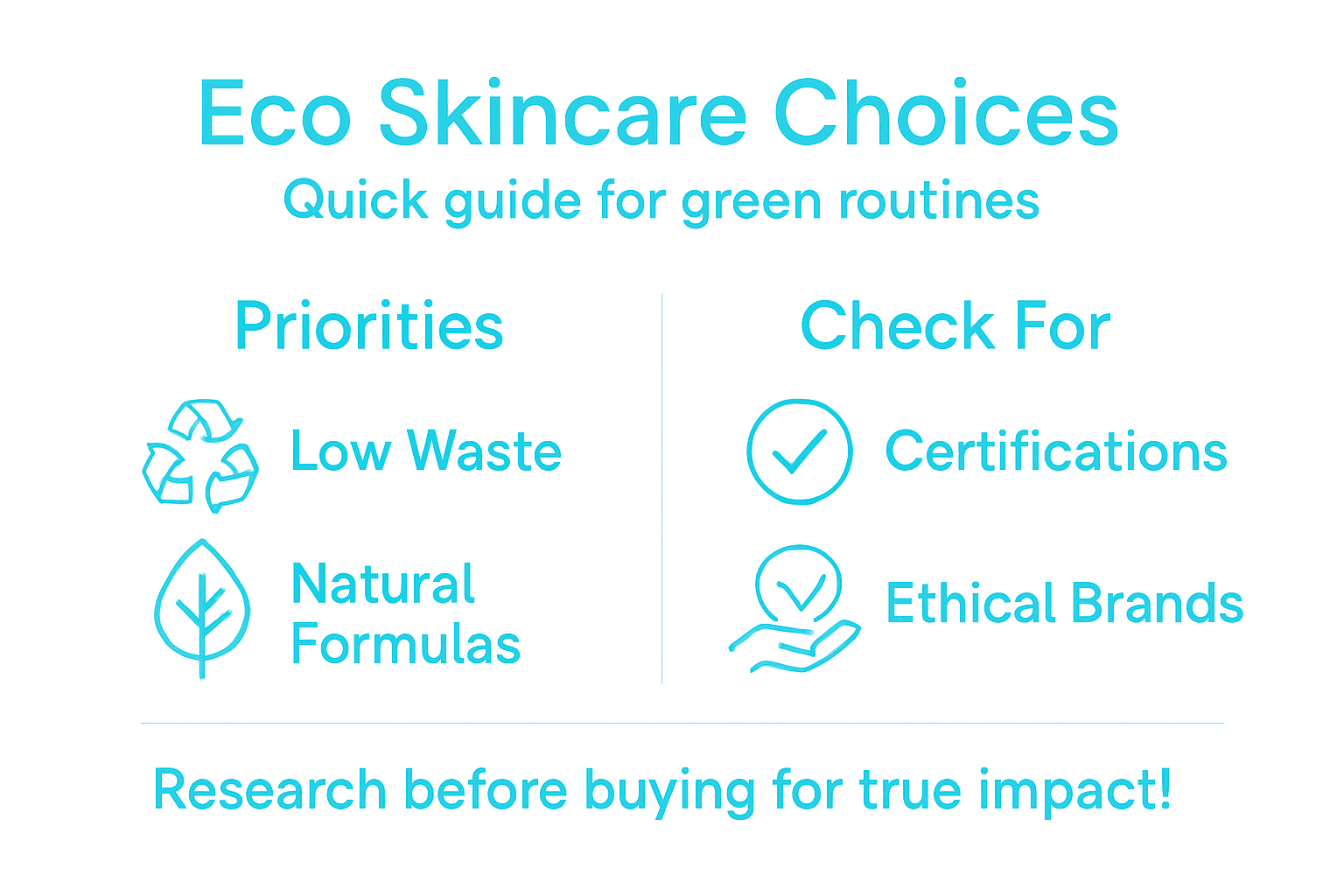
Look beyond surface level marketing claims and develop a discerning eye for genuine sustainability. Many brands use greenwashing techniques that sound environmentally friendly but lack substantive action. Investigate packaging materials carefully, prioritising recyclable, biodegradable, or reusable options. Pay attention to the entire lifecycle of packaging materials from production through disposal. Check for certifications from recognised environmental organisations, but also understand the nuanced difference between third-party verified claims and self proclaimed sustainability statements.
Dig deeper by researching brands transparency about their packaging processes. Seek out companies that provide detailed information about their environmental practices, demonstrate a commitment to reducing plastic waste, and actively work towards more sustainable packaging solutions. Understanding the sustainability verification framework can help you distinguish between genuine environmental commitments and superficial marketing tactics.
Expert Tip: Create a personal checklist of sustainable packaging criteria to consistently evaluate and compare different skincare brands environmental credentials.
Compare common sustainable packaging materials for skincare products:
| Material | Environmental Impact | End-of-Life Option | Typical Usage |
|---|---|---|---|
| Glass | Highly recyclable | Infinite recycling | Jars, bottles |
| Aluminium | Lightweight, recyclable | Curbside recycling | Tubes, lids |
| Bioplastic | Lower carbon footprint | Industrial composting | Some tubes, pumps |
| Paper/Card | Renewable, compostable | Home composting | Boxes, outer wraps |
Step 4: Verify certifications and ethical standards
Navigating the complex world of skincare certifications requires careful research and a critical mindset. Ethical skincare ratings offer valuable insights into understanding the true environmental and social impact of beauty products.
Focus on recognising legitimate certifications that demonstrate genuine commitment to sustainability and ethical practices. Look for internationally recognised standards such as Leaping Bunny for cruelty-free products, COSMOS for organic ingredients, and EWG Verified® certification which evaluates product safety and ingredient transparency. Be wary of vague marketing claims and greenwashing techniques that attempt to mislead consumers. Authentic certifications involve rigorous third-party assessments that examine a brand’s entire supply chain, including ingredient sourcing, manufacturing processes, worker treatment, and environmental impact.
Develop a systematic approach to verification by cross-referencing multiple sources. Research brands beyond their marketing materials, exploring independent sustainability reports, consumer watchdog platforms, and industry databases that provide comprehensive evaluations of ethical standards. Pay attention to specific aspects like palm oil sourcing, chemical composition, animal testing policies, and overall environmental commitments.
Here’s a summary of popular eco-friendly skincare certifications and what they represent:
| Certification | Focus Area | Key Benefit | Notable Requirement |
|---|---|---|---|
| Leaping Bunny | Cruelty-free | Animal protection | No animal testing allowed |
| COSMOS | Organic ingredients | Safer sourcing | Organic farming required |
| EWG Verified® | Ingredient safety | Health transparency | Ingredient disclosure |
| Fair Trade | Ethical sourcing | Community support | Fair wages for workers |
Expert Tip: Create a digital folder to save screenshots of verified certifications and ethical documentation for easy reference when making future purchasing decisions.
Step 5: Test selected eco-friendly skincare for suitability
Selecting the right eco-friendly skincare requires careful personal evaluation beyond initial research. Human skin patch testing provides a scientifically sound approach to understanding product compatibility with your unique skin profile.
Begin with a comprehensive patch test to assess potential skin reactions and sensitivities. Apply a small amount of the product to a discrete area of skin such as the inner forearm or behind the ear. Wait 24 to 48 hours, monitoring for any signs of irritation including redness, itching, swelling, or unusual skin texture changes. This method allows you to identify potential allergic responses or adverse reactions before applying products to larger areas of your body.
Consider your individual skin characteristics during testing. Factors like skin type, sensitivity levels, existing skin conditions, and environmental exposure can significantly impact how a product performs. Take detailed notes during your testing period, recording the product, application date, location, and any observed reactions. Cosmetic safety guidelines recommend thorough individual assessment to ensure product suitability.
Expert Tip: Photograph your patch test area at regular intervals to create a visual record of your skin’s response and track subtle changes that might be difficult to remember.
Discover Truly Eco-Friendly Skincare That Meets Your Needs
Choosing eco-friendly skincare can be overwhelming with so many options and uncertain sustainability claims. The article highlights the importance of clear goals, ingredient transparency, authentic certifications and product suitability for your skin type as keys to making wise choices. At The Soap Lab Scotland, we understand your desire to reduce environmental impact without compromising personal care. Our products reflect genuine commitments to organic ingredients, ethical sourcing and sustainable packaging.
Explore our Facial Care - Plant Powered Goodness collection packed with thoughtfully crafted formulations designed for sensitive skin and eco-conscious consumers. 
Start your journey today by visiting The Soap Lab Scotland to find authentic, handmade solutions that align perfectly with your eco-friendly skincare goals. Browse our curated range of Organic Personal Care Products for naturally effective options that support a greener lifestyle.
Frequently Asked Questions
How do I define my eco-friendly skincare goals?
Start by identifying your primary environmental concerns, such as reducing plastic waste or supporting ethical production. Write down your top three priorities, as this will guide your product selection process.
What should I look for when researching product ingredients?
Focus on natural ingredients that are ethically sourced and environmentally friendly. Examine product labels for details on ingredient sourcing and production methods, and prioritise those with transparent practices.
How can I evaluate the sustainability of skincare packaging?
Examine the materials used for packaging—opt for recyclable, biodegradable, or reusable options. Create a personal checklist of sustainable packaging criteria to compare different brands’ environmental credentials.
What certifications should I look for in eco-friendly skincare products?
Look for widely recognised certifications like Leaping Bunny for cruelty-free and EWG Verified® for ingredient transparency. Make a note of these certifications to guide your purchasing decisions and ensure the products meet your ethical standards.
How do I conduct patch tests for new skincare products?
Apply a small amount of the product to a discreet area of skin and wait 24 to 48 hours to check for irritation or reactions. Document your observations, noting any adverse effects to assess product compatibility with your skin type.
What actions can I take to ensure product suitability for my skin?
Monitor your skin’s reaction to new products during patch testing and keep detailed notes on your findings. Adjust your skincare routine based on your observations, refraining from using products that cause irritation.



