

What Is Artisanal Soap and Why It Matters
Choosing skincare that aligns with your values can feel like a challenge, especially when every product claims to be natural. For eco-conscious consumers in the United Kingdom, the decision goes beyond labels and clever branding. Artisanal soap offers a transparent alternative rooted in quality craftsmanship, sustainable production, and ethical sourcing. Discover how making this informed switch invites confidence in your daily routine while supporting both local makers and environmental wellbeing.
Table of Contents
- Defining Artisanal Soap And Common Misconceptions
- Traditional Methods Versus Industrial Soap Production
- Key Ingredients And Their Benefits
- Eco-Friendly Practices And Ethical Sourcing
- Practical Uses And Choosing The Right Bar
Key Takeaways
| Point | Details |
|---|---|
| Artisanal Soap Quality | Artisanal soap is crafted in small batches with a focus on high-quality, locally sourced ingredients, distinguishing it from mass-produced options. |
| Sustainable Practices | The production of artisanal soap typically involves eco-friendly methods, supporting local communities and reducing environmental impact. |
| Ingredient Benefits | Artisanal soaps use natural ingredients that nourish the skin and address specific skincare needs rather than just cleansing. |
| Personalised Skincare | Choosing artisanal soap should be a tailored approach, aligning the product with individual skin types and concerns for optimal results. |
Defining Artisanal Soap and Common Misconceptions
Artisanal soap represents a sophisticated approach to personal care that goes far beyond simple cleaning. Artisanal soap is a carefully crafted product created through small-scale production methods that prioritise quality, sustainability, and individual skill. Empirical research demonstrates that these products are not merely romanticised handmade items, but represent a meaningful intersection of craft, environmental consciousness, and economic responsibility.
At its core, artisanal soap distinguishes itself through several key characteristics:
- Produced in small, intentional batches
- Created using traditional techniques
- Emphasising high-quality, often locally sourced ingredients
- Minimal processing and preservation techniques
- Handmade with significant personal craftsmanship
Contrary to popular misconception, artisanal soap is not just about aesthetic appeal or nostalgia. These products embody a profound commitment to sustainable manufacturing practices, supporting local economies and reducing environmental impact. Each bar represents a deliberate choice to move away from mass-produced, chemical-laden alternatives.
Artisanal soap production is an intentional practice that balances aesthetic, environmental, and economic considerations.
Production methods differentiate artisanal soap from commercial alternatives. While industrial soap manufacturers prioritise efficiency and cost-reduction, artisan soap makers focus on ingredient quality, manufacturing process, and minimal environmental footprint. This approach means each soap batch receives meticulous attention, resulting in a product that reflects individual skill and environmental respect.
Pro tip: When selecting artisanal soap, examine the ingredient list and look for transparent information about the soap maker’s production methods and sourcing practices.
Traditional Methods Versus Industrial Soap Production
The fundamental differences between traditional and industrial soap production reveal a complex landscape of manufacturing philosophies and environmental implications. Saponification processes demonstrate profound variations in technique, ingredient selection, and overall product quality between artisan and mass-produced approaches.
Traditional soap making encompasses several distinctive characteristics:
- Hand-crafted production methods
- Use of natural, locally sourced ingredients
- Minimal chemical processing
- Small batch manufacturing
- Retention of natural glycerol content
- Personal oversight throughout production
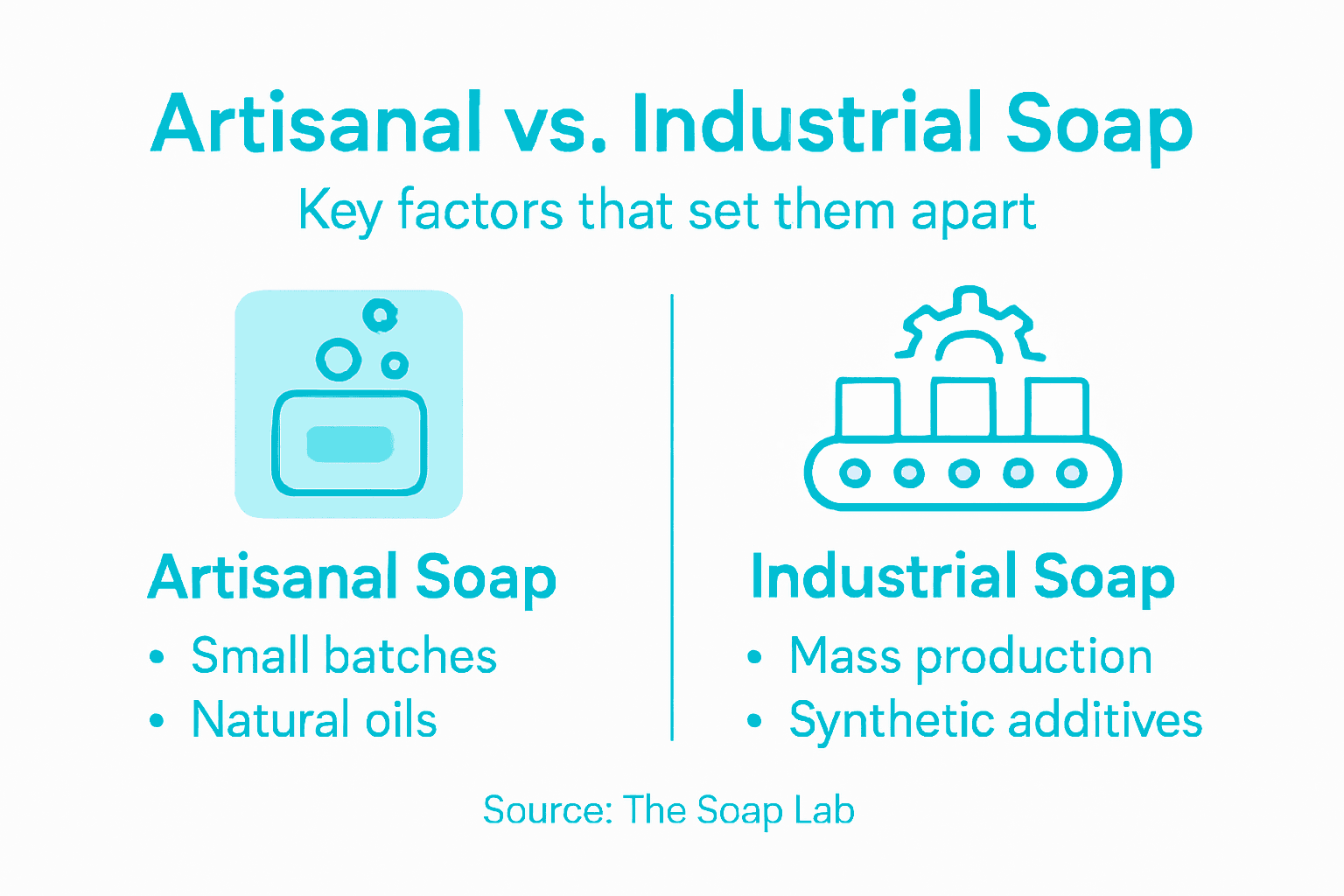
Industrial soap production, by contrast, prioritises efficiency and standardisation. Large-scale manufacturers typically employ mechanised systems that strip away many natural properties, replacing them with synthetic additives designed to reduce production costs and extend shelf life. These industrial processes often compromise the inherent moisturising and skin-nourishing qualities found in traditional soap formulations.
Industrial efficiency frequently undermines the nuanced craftsmanship inherent in traditional soap making techniques.
Chemical composition plays a crucial role in distinguishing these production methods. Traditional soap makers carefully select natural fats and oils, maintaining a delicate balance of ingredients that support skin health. Industrial producers, however, frequently utilise cheaper synthetic alternatives that may compromise long-term skin wellness and environmental sustainability.
To better understand production differences, here is a comparative overview of artisanal versus industrial soap approaches:
| Aspect | Artisanal Soap | Industrial Soap |
|---|---|---|
| Batch Size | Small and deliberate | Massive and automated |
| Ingredient Transparency | Highly detailed | Often vague |
| Environmental Impact | Reduced, locally focused | High, global sourcing |
| Impact on Skin | Nourishing and gentle | Potential for irritation |
Pro tip: Examine soap ingredient labels carefully, looking for natural oils and minimal synthetic additives to identify truly artisanal production methods.
Key Ingredients and Their Benefits
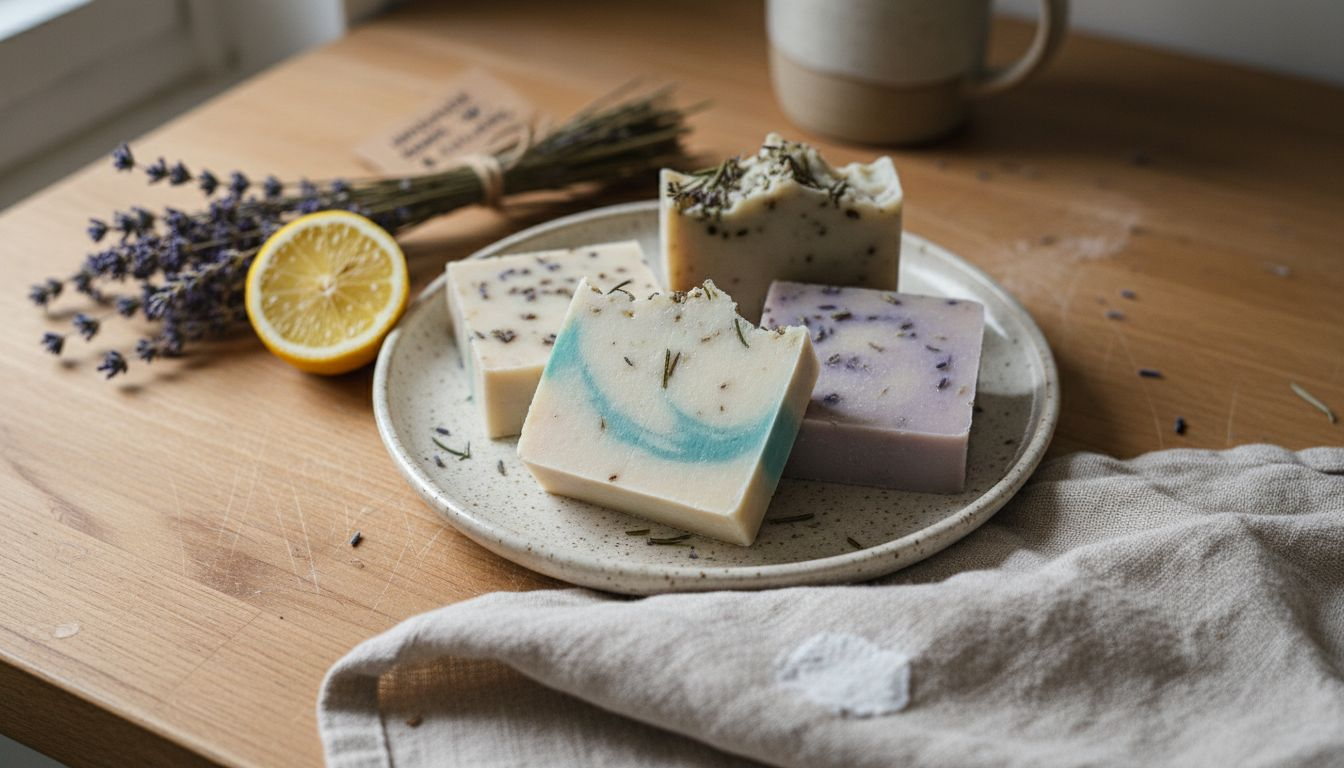
Artisanal soaps distinguish themselves through a carefully curated selection of natural ingredients that offer profound skin health benefits. Herbal soap formulations represent a sophisticated approach to skincare, combining botanical extracts and pure oils that nourish and protect the skin far beyond conventional cleaning methods.
Key ingredients in artisanal soaps typically include:
- Natural vegetable oils (olive, coconut, avocado)
- Essential botanical extracts
- Plant-based glycerin
- Organic herbal compounds
- Unrefined natural butters
- Minimally processed botanical additives
These carefully selected ingredients provide multiple benefits for skin health. Botanical extracts like aloe vera, neem, and tulsi deliver powerful antimicrobial and antioxidant properties, supporting the skin’s natural protective mechanisms. Unlike industrial soap ingredients, these natural compounds work harmoniously with the body’s own healing processes.
Natural ingredients represent a holistic approach to personal care, prioritising skin wellness over mere surface cleansing.
Botanical composition plays a critical role in distinguishing artisanal soaps. Vegan soap studies demonstrate that ingredients such as grape seed oil, green tea essence, and avocado oil contribute to superior skin hydration and gentle cleansing. These ingredients not only clean but also provide deep nourishment, making them ideal for sensitive and environmentally conscious consumers.
Pro tip: When selecting artisanal soap, prioritise products with transparent ingredient lists featuring recognisable, natural botanical components.
Eco-Friendly Practices and Ethical Sourcing
Artisanal soap production represents a profound commitment to environmental responsibility and sustainable manufacturing practices. Circular economy models demonstrate how small-scale soap makers can transform waste reduction into a comprehensive approach to ethical production, challenging traditional industrial manufacturing paradigms.
Key eco-friendly practices in artisanal soap production include:
- Recycling used cooking oils
- Sourcing local, organic ingredients
- Minimising packaging waste
- Supporting local agricultural communities
- Reducing chemical processing
- Implementing energy-efficient production methods
These sustainable approaches go beyond mere environmental consciousness. By carefully selecting ingredients and production methods, artisanal soap makers create a holistic system that supports ecological balance and community development. The use of recycled materials, such as converting waste cooking oils into soap base, represents an innovative approach to resource management.
Ethical sourcing transforms soap production from a simple manufacturing process into a meaningful environmental statement.
Sustainable production is more than a trend; it’s a fundamental reimagining of manufacturing. Academic research into circular economies highlights how artisanal soap makers can create closed-loop systems that minimise waste, support local economies, and reduce overall environmental impact. These practices demonstrate that small-scale production can be both economically viable and environmentally responsible.
Pro tip: When purchasing artisanal soap, ask producers about their ingredient sourcing and environmental practices to support genuinely sustainable brands.
Practical Uses and Choosing the Right Bar
Artisanal soaps offer far more than basic cleansing, providing targeted skincare solutions tailored to individual needs. Herbal soap formulations demonstrate remarkable versatility in addressing specific skin concerns through carefully selected botanical ingredients.
Consider your skin type when selecting an artisanal soap:
- Oily/Acne-Prone Skin:
- Neem-based soaps
- Tea tree oil infusions
- Charcoal-activated bars
- Dry/Sensitive Skin:
- Shea butter enriched soaps
- Goat’s milk formulations
- Olive oil-based bars
- Combination Skin:
- Balanced botanical blends
- Clay-infused options
- Gentle herbal extracts
Each soap variety offers unique benefits beyond standard cleansing. Some bars provide deep exfoliation, while others focus on intense hydration or addressing specific dermatological concerns like eczema or sensitivity. The complexity of artisanal soap goes far beyond commercial mass-produced alternatives.
Choosing the right soap is a personalised journey of understanding your skin’s unique requirements.
Ingredient selection becomes crucial in determining a soap’s effectiveness. Different botanical extracts and natural oils interact uniquely with various skin types, making informed choices essential for optimal skincare. Understanding these nuanced interactions allows consumers to select products that genuinely support their skin’s health and appearance.
Here’s a quick reference for choosing artisanal soaps based on skin type and expected benefits:
| Skin Type | Suggested Soap Base | Typical Benefit |
|---|---|---|
| Oily/Acne-Prone | Neem or tea tree oil | Controls excess oil |
| Dry/Sensitive | Shea butter or olive oil | Deep hydration |
| Combination | Clay-infused blends | Balances moisture levels |
Pro tip: Always perform a small patch test with new artisanal soaps to ensure compatibility with your skin’s specific characteristics.
Discover the True Essence of Artisanal Soap with The Soap Lab
If you value skincare that respects both your skin and the planet, you understand the pain points highlighted in understanding what artisanal soap truly means. Choosing products free from harsh chemicals and loaded with natural, ethically sourced ingredients can be overwhelming. At The Soap Lab, we specialise in Organic Personal Care Products carefully crafted to align with the traditional methods and eco-friendly values discussed in the article. Our dedication to transparency, sustainability, and handcrafted quality ensures each bar nourishes your skin and supports local communities.
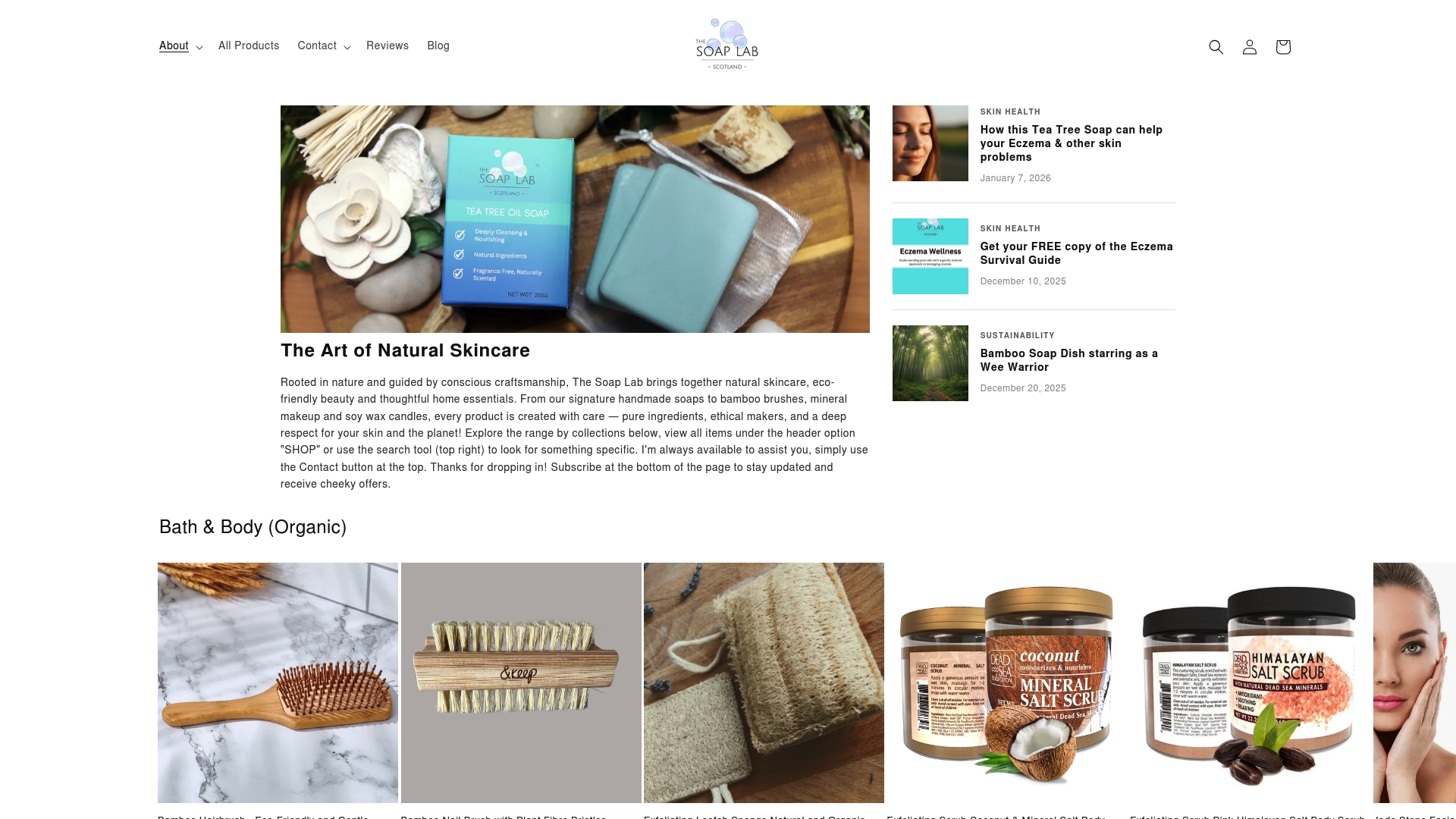
Experience the difference that authentic artisanal soap makes by exploring our selection at The Soap Lab. Whether you seek gentle cleansers for sensitive skin or deeply nourishing bars rich in botanical extracts, start your journey towards mindful skincare now. Visit our Organic Personal Care Products – The Soap Lab Scotland and dive deeper into Facial Care - Plant Powered Goodness – The Soap Lab Scotland for tailored options that truly care for your skin and the environment.
Frequently Asked Questions
What is artisanal soap?
Artisanal soap is a high-quality personal care product made in small batches using traditional techniques and natural, often locally sourced ingredients. It prioritises sustainability and craftsmanship over mass production.
How does artisanal soap differ from industrial soap?
Unlike industrial soap, which focuses on mass production and efficiency, artisanal soap is handcrafted, uses natural ingredients, and maintains a minimal environmental footprint. This results in a product that is often more nourishing and gentle on the skin.
What are the key benefits of using artisanal soap?
Artisanal soap offers numerous benefits including natural hydration, better skin compatibility, and reduced chemical exposure. The carefully selected botanical ingredients can provide various skin health benefits, addressing issues like dryness, sensitivity, and acne.
How can I choose the right artisanal soap for my skin type?
To choose the right artisanal soap, consider your skin type and specific concerns. For oily skin, look for neem or tea tree oil soaps; for dry or sensitive skin, opt for shea butter or olive oil-based soaps. Understanding the benefits of different botanical ingredients can help guide your selection.



