

Step by Step Natural Skincare Routine for Sensitive Skin
Finding natural skincare solutions that truly nurture sensitive skin can feel like searching for clarity in a sea of confusing labels and harsh chemicals. For British eco-conscious consumers, protecting the delicate skin barrier with gentle, handmade products is more than a preference—it is a commitment to health and sustainability. This guide breaks down each step for creating a routine using ethical, sustainable essentials, highlighting how respecting sensitive skin barrier protection lays the foundation for lasting comfort and radiant confidence.
Table of Contents
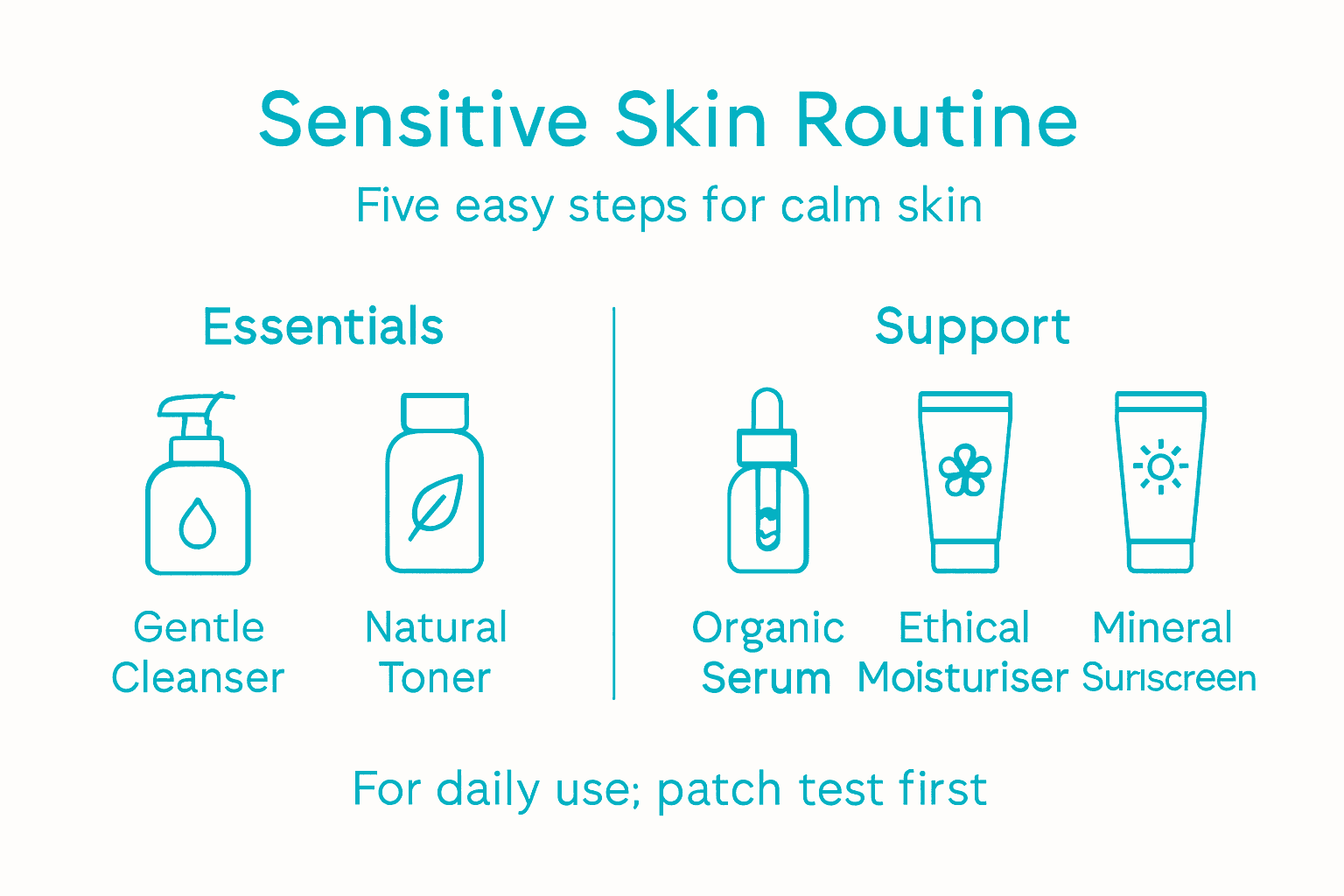
- Step 1: Prepare Your Skin With Gentle Cleansing
- Step 2: Apply A Soothing Natural Toner
- Step 3: Nourish With An Organic Serum Or Oil
- Step 4: Hydrate Using An Ethical Moisturiser
- Step 5: Protect Your Skin With Natural Sunscreen
Quick Summary
| Essential Insight | Clarification |
|---|---|
| 1. Opt for gentle cleansing | Use mild cleansers with soothing ingredients like glycerin and niacinamide to protect sensitive skin without irritation. |
| 2. Incorporate a natural toner | Choose alcohol-free toners with botanical extracts to hydrate and balance sensitive skin after cleansing. |
| 3. Use organic serums or oils | Select cold-pressed, non-comedogenic oils to nourish and support the skin’s barrier, applying them gently. |
| 4. Prioritise ethical moisturisers | Look for fragrance-free moisturisers with hyaluronic acid that provide hydration without overwhelming sensitive skin. |
| 5. Apply mineral-based sunscreens | Use non-nano zinc oxide sunscreens offering broad-spectrum protection to shield sensitive skin from UV damage. |
Step 1: Prepare your skin with gentle cleansing
Gentle cleansing forms the cornerstone of an effective skincare routine for sensitive skin. Your goal is to remove impurities without disrupting the delicate skin barrier, which acts as your skin’s protective shield.
The right cleansing approach involves understanding sensitive skin barrier protection. For individuals with sensitive complexions, selecting a mild cleanser becomes crucial. Here are key considerations:
- Choose cleansers with soothing ingredients like glycerin and niacinamide
- Avoid harsh surfactants that strip natural oils
- Use lukewarm water to prevent skin irritation
- Pat skin dry instead of rubbing
When cleansing, apply your chosen product using gentle, circular motions. Focus on being delicate - aggressive scrubbing can damage your skin’s protective barrier. Rinse thoroughly but carefully, ensuring no residue remains.
Sensitive skin requires a careful, mindful approach to cleansing that respects its natural balance.
Pro tip: Consider keeping your cleansing products in a cool environment to help preserve their active ingredients and provide a refreshing sensation during application.
Step 2: Apply a soothing natural toner
Applying a natural toner is a crucial step in caring for sensitive skin. Your goal is to restore skin balance, hydrate, and prepare your complexion for subsequent skincare treatments.
Herbal facial toners with natural ingredients can provide exceptional benefits for sensitive skin types. Key considerations when selecting and applying your toner include:
- Choose toners with soothing botanical extracts
- Use alcohol-free formulations
- Apply with gentle, patting motions
- Focus on hydration and skin balance
When applying your toner, dispense a small amount onto a clean cotton pad. Gently sweep across your face and neck, avoiding the delicate eye area. Allow the toner to absorb naturally, giving your skin time to drink in the nourishing ingredients.
Natural toners work harmoniously with your skin’s intrinsic healing mechanisms.
Pro tip: Keep your toner in the refrigerator for an extra cooling and refreshing application, especially beneficial for sensitive skin during warmer months.

Step 3: Nourish with an organic serum or oil
Nourishing sensitive skin requires a delicate approach, focusing on nature-based sensitive skin treatments that restore and protect your skin’s natural balance. The right organic serum or oil can provide deep hydration while supporting your skin’s intrinsic healing capabilities.
When selecting an organic serum or oil for sensitive skin, consider these essential guidelines:
- Choose cold-pressed natural oils
- Look for anti-inflammatory botanical ingredients
- Select lightweight, non-comedogenic formulations
- Prioritise organic, unrefined oils
Apply your chosen serum or oil using gentle, upward patting motions. Use no more than a few drops, warming the product between your palms before delicate application. Focus on pressing the oil into your skin rather than rubbing, which can cause unnecessary irritation.
Organic oils are nature’s most potent healers for sensitive skin.
Pro tip: Always perform a patch test with new oils and introduce them gradually into your skincare routine to ensure compatibility with your sensitive skin.
Step 4: Hydrate using an ethical moisturiser
Selecting the right moisturiser is crucial for sensitive skin, focusing on natural moisturizing factor and lipid-based formulations that support and restore your skin’s delicate barrier.
When choosing an ethical moisturiser for sensitive skin, consider these essential guidelines:
- Prioritise fragrance-free formulations
- Look for ingredients like hyaluronic acid
- Select products with minimal, natural ingredients
- Choose cruelty-free and sustainably packaged options
Apply your moisturiser using gentle, upward patting motions. Use a small amount, spreading evenly across your face and neck. Allow the product to absorb completely, giving your skin time to drink in the nourishing ingredients without overwhelming its sensitive nature.
An ethical moisturiser is more than a product - it’s a commitment to your skin’s health and the environment.
Pro tip: Store your moisturiser in a cool, dark place to preserve its active ingredients and maintain its efficacy for sensitive skin.
Step 5: Protect your skin with natural sunscreen
Protecting sensitive skin requires a thoughtful approach, focusing on natural UV protection from plant-based compounds that shield your skin without causing irritation. Your goal is to defend against harmful solar radiation while maintaining your skin’s delicate balance.
When selecting a natural sunscreen for sensitive skin, prioritise these essential guidelines:
- Choose mineral-based sunscreen ingredients
- Look for broad-spectrum protection
- Select non-nano zinc oxide formulations
- Avoid chemical UV filters that cause skin reactions
- Opt for antioxidant-rich botanical ingredients
Apply sunscreen generously but gently, using smooth, even strokes. Use approximately one teaspoon for your face and neck, ensuring complete coverage. Reapply every two hours, or more frequently if swimming or sweating, to maintain consistent protection.
Here is a comparison of key ingredient types and their impact on sensitive skin:
| Ingredient Type | Example | Benefit for Sensitive Skin |
|---|---|---|
| Humectants | Glycerin | Boosts hydration and comfort |
| Emollients | Jojoba oil | Softens and smooths texture |
| Occlusives | Shea butter | Seals in moisture, protective |
| Antioxidants | Green tea extract | Reduces inflammation |
| Minerals | Zinc oxide | Physical UV defence, soothing |
Natural sunscreens provide protection that works in harmony with your skin’s inherent defence mechanisms.
Pro tip: Consider layering your natural sunscreen over your moisturiser for enhanced protection and smoother application.
Here’s how each step supports sensitive skin health:
| Step | Main Benefit | Notable Ingredients or Qualities | Application Tip |
|---|---|---|---|
| Gentle Cleansing | Minimises irritation, cleanses softly | Glycerin, niacinamide, mild surfactants | Pat dry, avoid hot water |
| Natural Toner | Restores pH, hydrates skin | Botanical extracts, alcohol-free | Pat on gently, avoid eyes |
| Organic Serum/Oil | Deep nourishment and barrier repair | Cold-pressed natural oils | Use few drops, press in |
| Ethical Moisturiser | Locks in moisture, ethical sourcing | Hyaluronic acid, fragrance-free | Even layer, upward motion |
| Natural Sunscreen | Protects from UV, prevents irritation | Zinc oxide, botanicals | Reapply every 2 hours |
Embrace a Gentle Skincare Routine Tailored for Sensitive Skin
Sensitive skin demands a skincare routine that respects its delicate nature and supports the vital skin barrier with soothing, natural ingredients. If you struggle with irritation, dryness, or redness, achieving balance through gentle cleansing, natural hydration, and ethical moisturising is essential. This article highlights the importance of choosing products that nourish without aggression while protecting your skin’s health.
Explore our Facial Care - Plant Powered Goodness collection for carefully crafted solutions made with cold-pressed oils, botanical extracts and fragrance-free formulations designed specifically for sensitive skin needs. Our range of Organic Personal Care Products embraces sustainability and purity, helping you nurture your skin while honouring the planet.

Take the step today towards a skincare ritual that truly supports sensitive skin with eco-friendly, ethically sourced products from The Soap Lab. Discover your perfect match and enjoy calm, balanced skin by shopping our natural skincare collections now.
Frequently Asked Questions
How can I choose a gentle cleanser for sensitive skin?
To choose a gentle cleanser for sensitive skin, select products with soothing ingredients like glycerin and niacinamide. Avoid harsh surfactants and use lukewarm water when cleansing to minimise irritation.
What should I look for in a natural toner for sensitive skin?
When selecting a natural toner, prioritise alcohol-free formulations with soothing botanical extracts. Apply it gently with a clean cotton pad to help restore your skin’s balance and hydration.
How do I effectively use an organic serum or oil on sensitive skin?
Use an organic serum or oil by applying a few drops and warming it between your palms. Gently press it into your skin using upward motions to ensure optimal absorption and nourishment without irritation.
What ingredients are essential in an ethical moisturiser for sensitive skin?
An ethical moisturiser for sensitive skin should be fragrance-free and contain ingredients like hyaluronic acid, which helps lock in moisture. Use a small amount and apply it smoothly in an upward motion for effective hydration.
How do I select the right natural sunscreen for sensitive skin?
Choose a natural sunscreen that features mineral-based ingredients like non-nano zinc oxide for broad-spectrum protection. Apply it generously and reapply every two hours to ensure effective UV defence without irritation.
Recommended
- 7 Organic Skincare Tips for Sensitive, Eco-Friendly Care – The Soap Lab Scotland
- How to Switch to Natural Skincare Naturally, Step by Step – The Soap Lab Scotland
- Role of Natural Ingredients in Sustainable Skincare – The Soap Lab Scotland
- Role of Plant-Based Skincare – Why It Matters for Sensitive Skin – The Soap Lab Scotland



