

Role of Natural Exfoliants in Eco-Friendly Skincare
Choosing the right exfoliant can feel daunting when you want glowing skin without sacrificing your eco-friendly values. For many in the UK, sustainable beauty means finding gentle solutions that align with both ethical standards and effective skincare. By embracing natural exfoliants, you can support your skin’s renewal while reducing environmental impact and avoiding synthetic additives. This guide clarifies the principles behind natural exfoliation and helps you select ingredients that nourish your skin and respect the planet.
Table of Contents
- Natural Exfoliants Explained And Core Principles
- Types Of Natural Exfoliants And Key Distinctions
- How Natural Exfoliants Benefit The Skin
- Environmental Impact Of Exfoliant Choices
- Safe Use, Allergies And Common Mistakes
Key Takeaways
| Point | Details |
|---|---|
| Natural Exfoliants Types | Natural exfoliants include physical, enzymatic, and chemical options, each catering to different skin types and concerns. |
| Skin Benefits | Regular use of natural exfoliants promotes cellular renewal, antioxidant protection, and enhanced hydration. |
| Sustainability Importance | Choosing biodegradable and sustainable exfoliants helps reduce environmental harm and supports responsible skincare practices. |
| Caution with Use | Always perform a patch test before application and avoid over-exfoliating to maintain skin health. |
Natural exfoliants explained and core principles
Exfoliation is a fundamental skincare process that involves removing dead skin cells from the skin’s surface, promoting cellular renewal and maintaining a healthy complexion. Natural mechanisms of skin cell shedding reveal a fascinating biological process where skin naturally regenerates approximately every four weeks.
Natural exfoliants work through two primary mechanisms: mechanical and chemical. Mechanical exfoliation uses physical particles to manually remove dead skin cells, while chemical exfoliation utilises gentle acids that dissolve cellular bonds. These methods help improve skin texture, unclog pores, and stimulate collagen production.
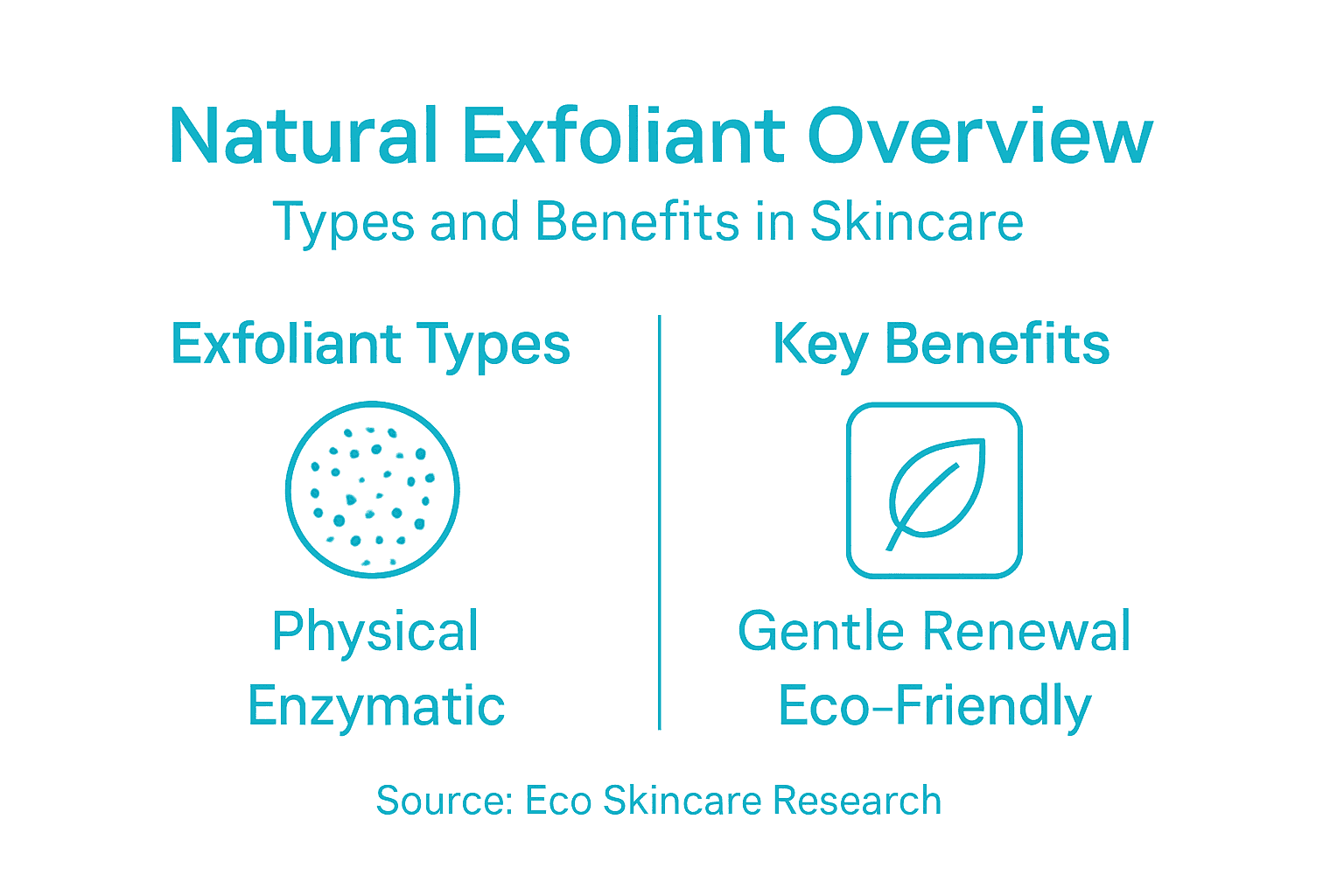
The key types of natural exfoliants include:
- Physical exfoliants: Ground botanical ingredients like oatmeal, rice powder, and sugar crystals
- Enzymatic exfoliants: Fruit-based enzymes from papaya, pineapple, and pomegranate
- Chemical exfoliants: Plant-derived alpha-hydroxy acids (AHAs) and beta-hydroxy acids (BHAs)
Chemical exfoliation techniques offer targeted approaches for different skin concerns, with acids like glycolic and salicylic acid providing gentle yet effective cell turnover. These natural ingredients can restore skin’s radiance while minimising irritation.
Pro tip: Select natural exfoliants that match your specific skin type and sensitivity level to ensure optimal results without causing unnecessary stress to your skin.
Types of natural exfoliants and key distinctions
Natural exfoliant origins reveal a fascinating spectrum of botanical, mineral, and organic ingredients designed to remove dead skin cells through mechanical or enzymatic processes. These substances range from ground plant materials to fruit-based enzymes, each offering unique properties tailored to specific skin types and concerns.
The primary categories of natural exfoliants include:
-
Mechanical exfoliants: Physical particles that manually remove dead skin cells
- Oatmeal: Gentle and soothing
- Sugar crystals: Provide mild abrasion
- Coffee grounds: Stimulate blood circulation
-
Enzymatic exfoliants: Fruit-based enzymes that break down protein bonds
- Papaya enzymes
- Pineapple bromelain
- Pomegranate extracts
- Mineral-based exfoliants: Natural ground particles with varying textures
Natural exfoliant selection techniques emphasise the critical importance of matching exfoliant characteristics to individual skin types. Sensitive skin requires gentler options with smaller, softer particles, while more resilient skin can tolerate coarser exfoliants with larger, more abrasive particles.
Understanding the nuanced properties of natural exfoliants allows for a more personalised skincare approach. Different botanical ingredients offer unique benefits, from antioxidant protection to improved circulation, making them superior alternatives to synthetic scrubs.
To help you identify which natural exfoliant may best suit your needs, the table below compares key types, mechanisms, and suggested skin types:
| Exfoliant Type | Main Mechanism | Ideal For | Unique Benefit |
|---|---|---|---|
| Physical (e.g. oatmeal, sugar) | Surface abrasion | Normal to robust skin | Boosts microcirculation |
| Enzymatic (papaya, pineapple) | Protein breakdown | Sensitive or dry skin | Gentle, non-abrasive action |
| Mineral-based | Manual resurfacing | Oily or combination skin | Provides natural trace minerals |
| Chemical (plant AHAs/BHAs) | Dissolves cell bonds | Dull or ageing skin | Promotes visible radiance |
Pro tip: Always perform a patch test with new natural exfoliants to ensure compatibility with your specific skin type and avoid potential irritation.
How natural exfoliants benefit the skin
Natural skincare products offer remarkable benefits that extend far beyond simple surface-level cleaning. These botanical ingredients provide a holistic approach to skin health, delivering antioxidant protection, reducing inflammation, and supporting the skin’s natural regeneration processes.
The key benefits of natural exfoliants include:
- Cellular Renewal: Removing dead skin cells to reveal brighter, smoother skin
- Antioxidant Protection: Neutralising harmful free radicals
- Inflammation Reduction: Calming and soothing skin irritations
- Enhanced Circulation: Stimulating blood flow for improved skin health
- Moisture Retention: Improving skin’s ability to absorb hydrating ingredients
Aromatic plant extracts play a crucial role in advanced skincare, containing powerful bioactive compounds like flavonoids and phenolics. These natural ingredients combat oxidative stress, slow down aging processes, and provide multi-dimensional skin benefits ranging from anti-wrinkle to photoprotective properties.
Natural exfoliants work synergistically with the skin’s biological processes, offering a gentler alternative to synthetic scrubs. By supporting the skin’s natural renewal mechanisms, they help maintain a healthy, radiant complexion while minimising environmental damage and supporting long-term skin health.

This summary clarifies how choosing natural exfoliants benefits both your skin and the environment:
| Benefit Type | Skin Impact | Environmental Contribution |
|---|---|---|
| Cellular renewal | Reveals fresher complexion | Supports sustainable production |
| Antioxidant defence | Reduces damage and ageing | Minimises pollution and waste |
| Moisture support | Improves skin hydration | Biodegradable, harm-free runoff |
| Barrier protection | Soothes and stabilises skin | Fewer synthetic additives needed |
Pro tip: Choose natural exfoliants with multiple benefits, focusing on ingredients that match your specific skin concerns and provide holistic nourishment.
Environmental impact of exfoliant choices
Cosmetic industry trends reveal a significant shift towards more environmentally responsible exfoliation methods. Traditional synthetic microbeads, which pose substantial ecological risks, are being rapidly replaced by natural, biodegradable alternatives that minimise environmental harm and support sustainable skincare practices.
The key environmental considerations of exfoliant choices include:
- Biodegradability: Natural particles decompose naturally
- Renewable Source Origin: Ingredients sourced from sustainable plant materials
- Reduced Plastic Pollution: Eliminating microplastic contamination
- Lower Carbon Footprint: Minimising manufacturing and disposal environmental impacts
- Ecosystem Protection: Preventing harmful chemical runoff
Natural ingredient sourcing has become increasingly critical as consumers demand more ecologically responsible skincare solutions. Plant-based and mineral exfoliants offer significant advantages, including complete biodegradability and minimal environmental disruption compared to synthetic alternatives.
Consumer awareness and regulatory pressures are driving the beauty industry towards more sustainable practices. By choosing natural exfoliants, individuals can directly contribute to reducing environmental pollution and supporting more responsible product lifecycles.
Pro tip: When selecting exfoliants, prioritise ingredients with clear sustainability credentials and minimal processing to maximise your positive environmental impact.
Safe use, allergies and common mistakes
Natural skincare misconceptions challenge the widespread belief that natural ingredients are automatically safe for all skin types. Contrary to popular perception, botanical extracts and essential oils can trigger significant allergic reactions and skin sensitivities, requiring careful selection and individual assessment.
Common mistakes in natural exfoliant use include:
- Overuse of Exfoliants: Disrupting skin’s natural barrier
- Ignoring Individual Skin Sensitivity: Applying products without patch testing
- Mixing Incompatible Products: Combining multiple active ingredients
- Using Incorrect Exfoliation Frequency: Over or under-exfoliating
- Neglecting Skin Barrier Protection: Compromising skin’s natural defence mechanisms
Clean beauty ingredient safety requires understanding that ‘natural’ does not automatically mean hypoallergenic. Many plant-based ingredients can cause contact dermatitis, and consumers must approach natural skincare with informed caution, consulting dermatological experts and performing thorough patch tests.
Proper exfoliation involves understanding your unique skin type, recognising potential allergic triggers, and adopting a measured approach that respects your skin’s individual characteristics and sensitivities.
Pro tip: Always perform a small patch test 24-48 hours before using a new natural exfoliant, applying a small amount to your inner forearm to check for potential allergic reactions.
Embrace Eco-Friendly Radiance with Natural Exfoliants
Discover the true power of natural exfoliants to renew your skin while protecting the planet. If you seek gentle, effective skincare that honours your skin’s unique needs and supports sustainable beauty routines this is your moment. Natural exfoliants like plant-based AHAs and enzymatic fruit extracts promote cellular renewal and antioxidant protection without harsh chemicals or wasteful microplastics.

Explore our curated collection of Facial Care - Plant Powered Goodness featuring handcrafted, organic products that align perfectly with these gentle exfoliation principles. At The Soap Lab, you will find ethically sourced and biodegradable ingredients designed to enhance moisture retention and soothe sensitive skin while ensuring environmental harmony. Act now to transform your skincare routine with natural exfoliants that deliver visible radiance and support long-term skin health. Browse our full selection of Organic Personal Care Products and begin your journey to a beautifully balanced and eco-conscious complexion today.
Frequently Asked Questions
What are the main types of natural exfoliants?
The primary types of natural exfoliants include physical exfoliants (like oatmeal and sugar), enzymatic exfoliants (such as papaya and pineapple enzymes), mineral-based exfoliants, and chemical exfoliants derived from plant alpha-hydroxy acids (AHAs) and beta-hydroxy acids (BHAs).
How do I choose the right natural exfoliant for my skin type?
Selecting the right natural exfoliant involves understanding your skin type and its sensitivity level. For sensitive skin, opt for gentler options like enzymatic exfoliants. If you have resilient skin, you may tolerate coarser physical exfoliants better.
What are the environmental impacts of using natural exfoliants?
Natural exfoliants are typically biodegradable and sourced from renewable materials, which helps reduce plastic pollution and lowers the carbon footprint compared to synthetic exfoliants. This makes natural options more environmentally friendly.
Are natural exfoliants safe for all skin types?
While natural exfoliants are often perceived as safe, they can still cause allergic reactions in some individuals. It’s essential to perform a patch test before using a new exfoliant, especially for those with sensitive skin, to avoid potential irritation.
Recommended
- 7 Examples of Eco-Friendly Skincare for Conscious Consumers – The Soap Lab Scotland
- Eco Friendly Skincare Checklist | 7 Essential Steps – The Soap Lab Scotland
- 7 Essentials for an Eco-Friendly Skincare Ingredients Checklist – The Soap Lab Scotland
- How to Choose Eco-Friendly Skincare Naturally and Wisely – The Soap Lab Scotland



