

How to Select Organic Skincare Naturally for Best Results
Choosing truly organic skincare can feel overwhelming when you are committed to both gentle ingredients and ethical values. Sensitive skin demands special attention, yet misleading labels and complex ingredient lists make selection tricky. This guide helps you make confident, informed choices with a focus on ingredient safety and brand transparency, so your routine nurtures your skin while supporting planet-friendly, low-waste practices.
Table of Contents
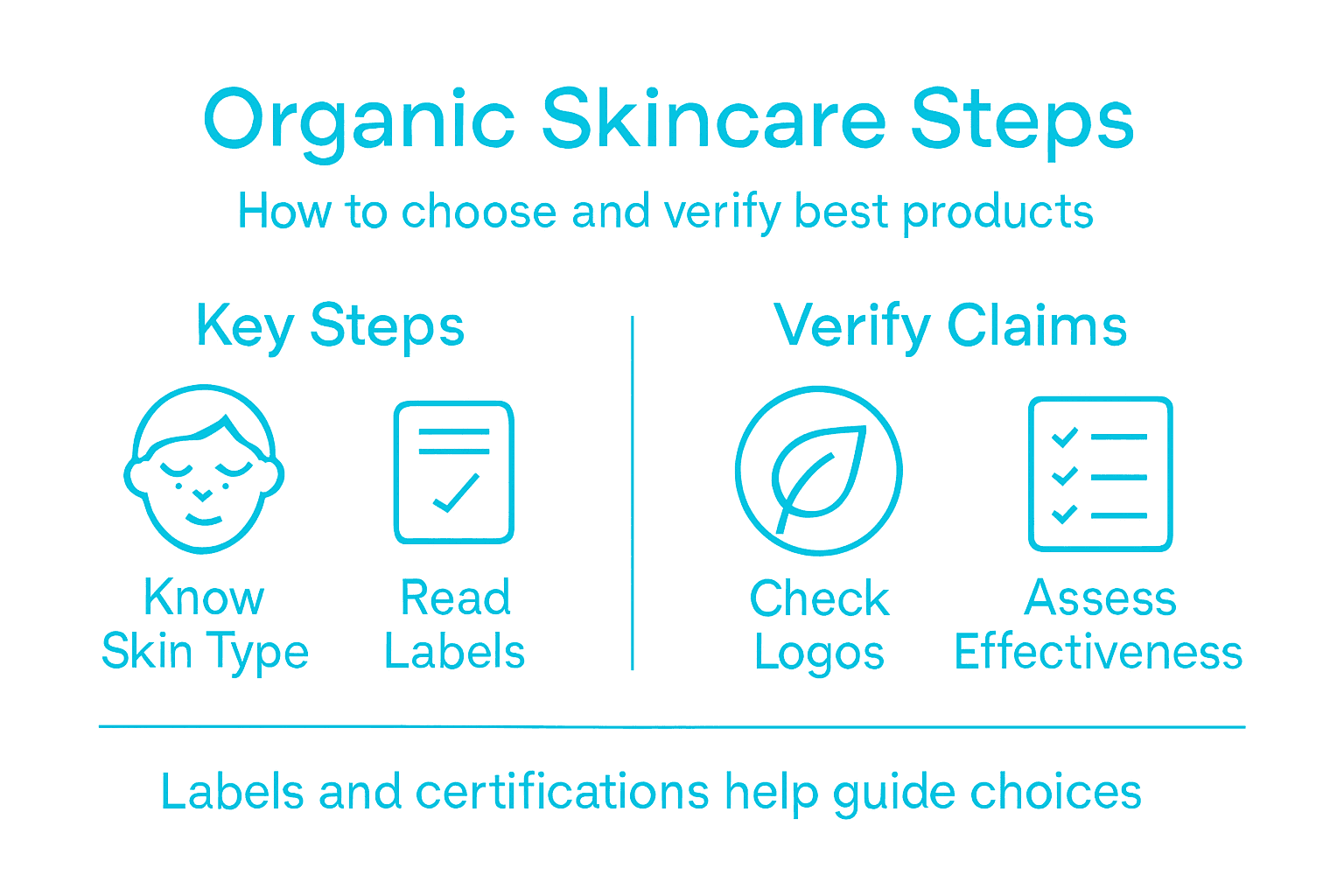
- Step 1: Identify Your Specific Skincare Needs
- Step 2: Research Reputable Ethical Brands
- Step 3: Examine Ingredient Lists Carefully
- Step 4: Verify Organic Certifications And Claims
- Step 5: Test And Assess Product Effectiveness
Quick Summary
| Key Point | Explanation |
|---|---|
| 1. Identify your skincare needs | Assess your skin type, concerns, and environmental influences to select suitable organic products tailored to your individual needs. |
| 2. Research ethical skincare brands | Evaluate brands for ingredient transparency, ethical sourcing, and cruelty-free practices to ensure you align with personal and environmental values. |
| 3. Examine ingredient lists carefully | Understand the composition and potential allergens in products by reviewing ingredient lists and focusing on their order and concentration. |
| 4. Verify organic certifications | Look for credible organic certification logos and confirmations to ensure the authenticity of any organic claims made by skincare products. |
| 5. Test product effectiveness methodically | Use a systematic approach, including patch tests and consistent documentation, to assess how new products affect your skin over time. |
Step 1: Identify your specific skincare needs
Identifying your unique skincare requirements forms the cornerstone of creating an effective organic skincare routine. Every individual’s skin is wonderfully different, and understanding your specific needs will help you select the most appropriate natural products.
To determine your skin profile, start by carefully observing your skin’s characteristics. Consider these key factors:
- Skin type: Oily, dry, combination, sensitive, or normal
- Current skin concerns: Acne, ageing, hyperpigmentation, uneven texture
- Environmental influences: Exposure to pollution, sun damage, climate conditions
A good skincare routine should be carefully tailored to individual skin types, focusing on protection, management, and prevention. For younger skin, prioritise environmental defence; for acne-prone skin, concentrate on managing breakouts; for mature skin, target signs of ageing.
Understanding your skin’s unique needs allows you to choose organic products that genuinely support your skin’s health and appearance.
Remember that organic ingredients do not automatically guarantee safety. The FDA emphasises that ingredient origin does not determine a product’s effectiveness or safety. Always review ingredient lists carefully and understand potential allergens or sensitivities.
Here’s a quick reference for tailoring your organic skincare routine by skin type:
| Skin Type | Recommended Focus | Common Triggers to Avoid |
|---|---|---|
| Oily | Regulate oil, prevent breakouts | Heavy oils, silicones |
| Dry | Deep hydration, barrier support | Alcohol-based ingredients |
| Combination | Balance oily and dry zones | Overly harsh treatments |
| Sensitive | Minimise irritation, calm redness | Fragrance, essential oils |
| Mature | Enhance elasticity, target lines | Unverified actives |
Professional Advice: Conduct a patch test with any new organic skincare product to ensure your skin responds positively and without irritation.
Step 2: Research reputable ethical brands
Researching reputable ethical brands is a critical step in selecting organic skincare that aligns with your values and skin health needs. The right brand can make all the difference in achieving both personal wellness and environmental responsibility.
To effectively evaluate skincare brands, leverage resources like the Environmental Working Group’s ingredient database which provides comprehensive insights into product safety and transparency. Look for brands that demonstrate commitment to:
- Ingredient transparency: Detailed, clear labelling
- Ethical sourcing: Sustainable ingredient procurement
- Cruelty-free certification: No animal testing
- Minimal environmental impact: Eco-friendly packaging
- Third-party certifications: Independent verification of claims
Ethical skincare brands are not just selling products; they’re promoting a holistic approach to personal and planetary wellness.
Additionally, resources like the Clean Label Project can help you identify brands meeting rigorous safety and transparency standards. Pay attention to certifications that go beyond marketing claims and provide genuine substantive verification.

Professional Advice: Cross-reference multiple ethical certification sources to ensure the brands you choose genuinely meet high standards of ingredient safety and environmental responsibility.
Step 3: Examine ingredient lists carefully
Carefully examining ingredient lists is your most powerful defence against potentially harmful skincare products. Understanding what goes into your skincare is crucial for protecting both your skin and overall health.
When reviewing ingredients, the FDA requires cosmetic ingredient labelling to follow specific guidelines. Ingredients are typically listed in descending order of predominance, which means the first few ingredients represent the product’s primary components. Focus your attention on these key aspects:
- Order of ingredients: Most prevalent ingredients appear first
- Scientific names: Look up unfamiliar chemical terminology
- Potential allergens: Identify known skin irritants
- Concentration levels: Understand active ingredient percentages
- Natural versus synthetic: Assess ingredient origin
Learning to read ingredient lists is like decoding a scientific language that reveals a product’s true potential and limitations.
Additional resources like the Cosmetic Ingredient Review Expert Panel provide comprehensive safety assessments that can help you make informed decisions about product ingredients. Always cross-reference ingredient lists with reliable scientific databases to understand potential risks and benefits.
Professional Advice: Keep a personalised list of ingredients that trigger skin sensitivities, and always compare new products against this reference to prevent adverse reactions.
Step 4: Verify organic certifications and claims
Authentic organic certification requires more than just marketing claims. Understanding how to verify legitimate organic credentials will protect you from misleading product labels and ensure you’re making truly sustainable skincare choices.
The USDA National Organic Program regulates organic labelling standards for cosmetic products, establishing crucial guidelines for consumers. Pay close attention to these key certification verification strategies:
- Official certification logos: Look for recognised organic seals
- Percentage of organic ingredients: Check precise organic content
- Third-party verification: Confirm independent assessment credentials
- Detailed ingredient transparency: Understand exact organic composition
- Annual certification renewal: Ensure current organic status
Not all organic claims are created equal - genuine certification demands rigorous, ongoing scrutiny.
Additionally, consumers can verify certification status through official USDA databases, which provide comprehensive information about each certified organic product. These resources offer a transparent mechanism for confirming the authenticity of organic claims.
This summary outlines key organic certification logos and what they signal:
| Certification Logo | Region of Recognition | Meaning for Skincare Buyers |
|---|---|---|
| USDA Organic | United States | Contains ≥95% certified organic ingredients |
| COSMOS Organic | European Union | Meets strict natural and organic criteria |
| Soil Association | United Kingdom | Independent standards, ethical sourcing |
| ECOCERT | Global | Natural origins, annual third-party audit |
Professional Advice: Always cross-reference organic claims with multiple authoritative sources to guarantee the legitimacy of your skincare product’s organic certification.
Step 5: Test and assess product effectiveness
Testing and assessing skincare product effectiveness requires a systematic and patient approach. Understanding how a product interacts with your unique skin is crucial for making informed skincare decisions.
The Cosmetic Ingredient Review recommends thorough scientific evidence evaluation when assessing product performance. Develop a comprehensive testing strategy by following these essential steps:
- Patch testing: Check for potential allergic reactions
- Gradual introduction: Implement new products slowly
- Consistent application: Use products as directed
- Detailed documentation: Track skin changes meticulously
- Objective measurement: Note specific improvements
Effective skincare is a personalised journey of discovery, not a one-size-fits-all solution.
The FDA emphasises manufacturer responsibility for ensuring product safety and efficacy. This means you should approach product testing with a critical and methodical mindset, understanding that individual results can vary significantly.
Professional Advice: Create a dedicated skincare journal to record precise observations, tracking product performance, skin reactions, and long-term changes with scientific precision.
Discover Organically Pure Skincare Tailored to Your Needs
Selecting the right organic skincare can be challenging when faced with confusing labels and uncertain claims. This article highlights the importance of understanding your unique skin requirements and verifying genuine organic certifications to ensure optimum results. At The Soap Lab Scotland, we share your commitment to nature and transparency by offering products that prioritise ingredient integrity, ethical sourcing, and effective natural care.

Elevate your daily routine with our thoughtfully curated Organic Personal Care Products designed for all skin types and concerns. Explore our Facial Care - Plant Powered Goodness range to gently support your skin’s health without compromise. Take the first step towards radiant, responsibly crafted skincare today at The Soap Lab Scotland. Your skin deserves nothing less than pure care you can trust.
Frequently Asked Questions
How do I identify my specific skincare needs for organic skincare?
To identify your specific skincare needs, observe your skin type, current concerns, and environmental influences. Begin by categorising your skin as oily, dry, combination, sensitive, or normal and then assess any unique issues such as acne or ageing signs.
What should I look for in a reputable ethical organic skincare brand?
When researching a reputable ethical organic skincare brand, seek those with clear ingredient transparency, ethical sourcing, and cruelty-free certification. Verify their commitment by checking for recognised organic seals and reading consumer reviews about their practices.
How can I effectively read and understand ingredient lists for skincare products?
To effectively read an ingredient list, focus on the first few ingredients, as they represent the main components. Look up unfamiliar names and check for potential allergens or irritants that may affect your skin type.
What organic certifications should I verify on skincare product labels?
Verify organic certifications by checking for recognised certification logos, the percentage of organic ingredients, and third-party verification of claims. Authentic seals, like USDA Organic, indicate that products meet rigorous organic standards, ensuring quality and safety.
How can I test and assess the effectiveness of a new organic skincare product?
To test a new organic skincare product, conduct a patch test first to check for allergic reactions, then introduce it gradually into your routine. Document your skin’s response over 30 days to track improvements or adverse effects for better evaluation.
Recommended
- Organic Skincare Explained: Benefits for Sensitive Skin – The Soap Lab Scotland
- 7 Organic Skincare Tips for Sensitive, Eco-Friendly Care – The Soap Lab Scotland
- Role of Natural Ingredients in Sustainable Skincare – The Soap Lab Scotland
- How to Switch to Natural Skincare Naturally, Step by Step – The Soap Lab Scotland



